10 Apartment Inspiration Aesthetic Vintage Ideas
Classic interior styling remains widely popular across visual discovery platforms due to its warmth, sustainability, and personal character. Integrating older design elements into modern layouts offers exceptional practical value by encouraging secondhand sourcing and reduced consumption. The appeal lies in mixing historical charm with modern design principles, allowing homeowners to express individuality through curated decor selections. This approach serves as a beginner friendly method for creating distinct spaces using accessible budget ideas rather than mass-produced retail collections. Renters benefit significantly from this creative project direction because freestanding antique cabinets, decorative wall mirrors, and textured floor rugs provide immediate character without violating lease agreements. Sourcing unique pre-owned items allows individuals to build an inviting, layered home aesthetic gradually, establishing long-term design flexibility that effortlessly adapts as personal tastes evolve across different living spaces.
Materials and Preparation
Proper preparation forms the foundation for successfully executing a cohesive historic interior layout in a contemporary apartment setting. Begin by measuring room dimensions, window frames, and doorway clearances to ensure all prospective furniture pieces fit comfortably within the space. Essential materials for these projects include solid wood side tables, brass mounting hardware, velvet upholstery fabrics, woven floor rugs, and antique-style frames. Assemble basic tools such as measuring tapes, spirit levels, non-damaging wall hooks, and microfiber cleaning cloths for surface preparation. Sanding blocks and furniture polish are useful for restoring pre-owned wooden surfaces to their original finish. Detailed planning considerations involve establishing a consistent color palette, evaluating natural light exposure, and mapping out functional traffic pathways across living areas. Pre-planning these elements guarantees that every decorative addition contributes to an organized, well-balanced interior layout.
MAIN IDEAS SECTION
Idea 1: Mid-Century Teak Sideboard Accent Station
Step-by-Step Guide
Positioning a low-profile mid-century teak sideboard against a living room wall creates an immediate structural anchor for small spaces. Measure the target wall space to ensure the wooden console leaves adequate clearance near entry doorways and adjacent seating setups. Clean the timber surface thoroughly using a specialized wood conditioner to restore its warm, rich grain tones. Hang an oversized, gold-leaf ornate mirror roughly eight inches above the console top to bounce natural window light across the room. Arrange a brass table lamp featuring an off-white pleated shade on one side of the cabinet to establish asymmetrical balance. Complete the tabletop styling with a short stack of vintage hardcover books, a small ceramic vessel, and a framed retro art print resting against the wall. This setup provides functional storage while adding timeless elegance.

Idea 2: Framed Antique Gallery Wall with Thrifted Art
Execution Process
Assembling a curated gallery wall composed of thrifted landscape paintings and aged gold frames introduces instant historical depth to apartment walls. Collect six to eight vintage frames of varying dimensions from local antique shops, focusing on distressed wood and tarnished brass finishes. Source botanical sketches, classical portrait prints, and textured landscape artwork printed on heavy matte cotton paper. Lay the frames flat on the floor first to test balanced layout configurations, maintaining two-to-three-inch gaps between each frame edge. Secure non-damaging adhesive picture hangers to the back of each frame to protect rental wall surfaces during installation. Mount the frames carefully using a spirit level to maintain consistent horizontal lines across the display. This decorative method creates a personalized focal point that elevates plain vertical surfaces without requiring permanent wall modifications.

Idea 3: Warm Velvet and Patterned Textile Layering
How to Create
Draping rich velvet textiles and patterned vintage fabrics over modern seating updates standard furniture with cozy retro texture. Select throw pillow covers crafted from deep amber, olive green, or rusty terracotta velvet to introduce warm accent tones against neutral couch upholstery. Place a vintage-inspired Persian-style runner or area rug featuring faded floral motifs directly beneath the central seating group to anchor the room layout. Layer an embroidered linen or fringe-trimmed throw blanket across the back of an armchair to add visual complexity and physical softness. Ensure all selected fabric patterns share at least one common accent color to maintain visual harmony throughout the seating zone. This quick styling technique shields original furniture surfaces from daily wear while establishing an inviting, tactile atmosphere across compact apartment living rooms.

Idea 4: Brass Arc Floor Lamp and Velvet Reading Nook
Setup Method
Designing a dedicated reading corner using a classic brass arc lamp and an upholstered velvet armchair transforms underutilized apartment corners into functional retreats. Position a tufted or rounded armchair in a muted jewel tone, such as forest green or mustard yellow, in an open corner space. Place a tall, sweeping brass arc floor lamp behind the chair frame, positioning the light shade directly over the primary seating area for reading illumination. Add a small round walnut side table alongside the armchair to hold hot beverages and books. Decorate the small table with a lace-trimmed coaster and a small glass vase containing dried lavender stems. Place a plush, high-pile cream throw rug under the chair legs to define the reading nook boundaries cleanly from the rest of the living area.
Idea 5: Layered Antique Wall Mirrors for Light Expansion
How to Make
Arranging a cluster of small antique wall mirrors expands perceived room depth while reflecting natural light into darker apartment entryways. Sourcing five to seven small mirrors with detailed brass, carved wood, or wrought iron frames creates a charming decorative display. Clean each mirror glass surface carefully with specialized glass cleaner to ensure maximum clarity and light reflectivity. Arrange the mirrors on an accent wall near a main window source, positioning the largest mirror in the center as the primary visual anchor. Surround the main frame with smaller decorative mirrors in an organic, floating arrangement, maintaining even spacing between frame edges. Secure each piece using sturdy rental-safe wall anchors rated for frame weights. This light-reflecting decoration technique brightens dim interior hallways while adding intricate historical detailing to vertical wall surfaces.

Idea 6: Reclaimed Wood Floating Shelves with Antique Glassware
Step-by-Step Guide
Installing reclaimed wood floating shelves creates open storage for displaying amber glass bottles, vintage stoneware, and classic literature. Mount two parallel thick timber shelves using heavy-duty concealed brackets, checking alignment with a spirit level before securing hardware into wall studs. Coat the reclaimed wood with a matte protective sealer to highlight natural knots, grain variations, and aged timber character. Arrange a collection of vintage amber glass apothecary jars, small stoneware crocks, and clear glass bud vases along the upper shelf tier. Place small trailing plants, such as pothos or ivy, inside retro ceramic pots on the lower shelf to let green vines drape naturally over the wooden edges. Mix in small framed black-and-white family photographs to personalize the open storage display while keeping countertop surfaces completely clutter-free.

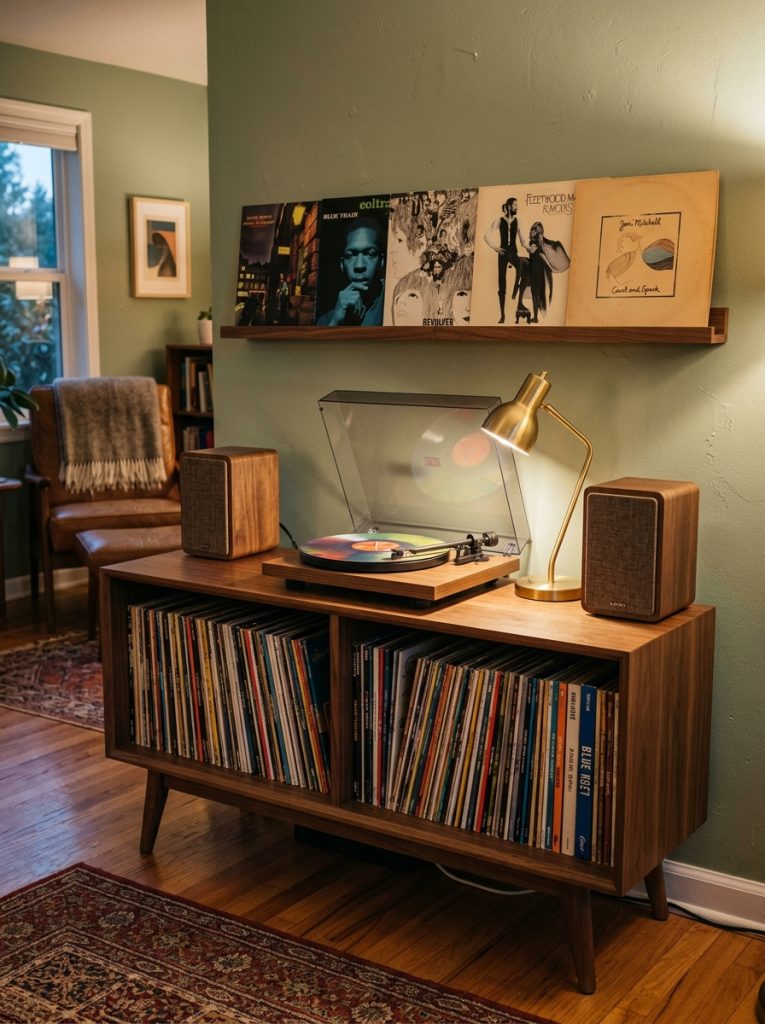
Idea 7: Retro Record Player Console with Vinyl Display
Execution Process
Setting up a dedicated vinyl listening station around a mid-century record player unit combines practical entertainment storage with nostalgic interior design. Select a low wood media cabinet featuring open cubbies or slatted record storage compartments to house vinyl albums upright. Position the record player centrally on the top cabinet surface, placing a compact set of bookshelf speakers on outer edges for balanced audio distribution. Mount a shallow wooden picture ledge directly above the console to display favorite album cover art as revolving wall decoration. Organize vinyl records inside the lower cubbies using acrylic or wooden dividers to maintain clean vertical alignment. Place a brass table lamp and a small potted fern beside the record player to illuminate the vinyl turntable surface during evening use, establishing a warm functional music corner.

Idea 8: Dark Floral Wallpaper Accent Wall with Moldings
How to Create
Applying removable peel-and-stick dark floral wallpaper creates a dramatic feature wall that mimics Victorian interior styling without damaging rental surfaces. Select a high-quality removable wallpaper design featuring large-scale botanical prints, moody roses, and dark green leaves against a charcoal backdrop. Clean the target wall surface thoroughly with a damp cloth and allow it to dry completely before applying wallpaper panels. Measure and cut paper strips, adding two extra inches at top and bottom margins to allow for accurate pattern alignment along seam edges. Smooth out air bubbles from the center outward using a flat plastic squeegee tool during application. Frame the perimeter of the accent wall with lightweight painted foam moldings installed using removable mounting strips. This high-contrast installation creates a striking backdrop for neutral-colored seating and classic brass lighting.
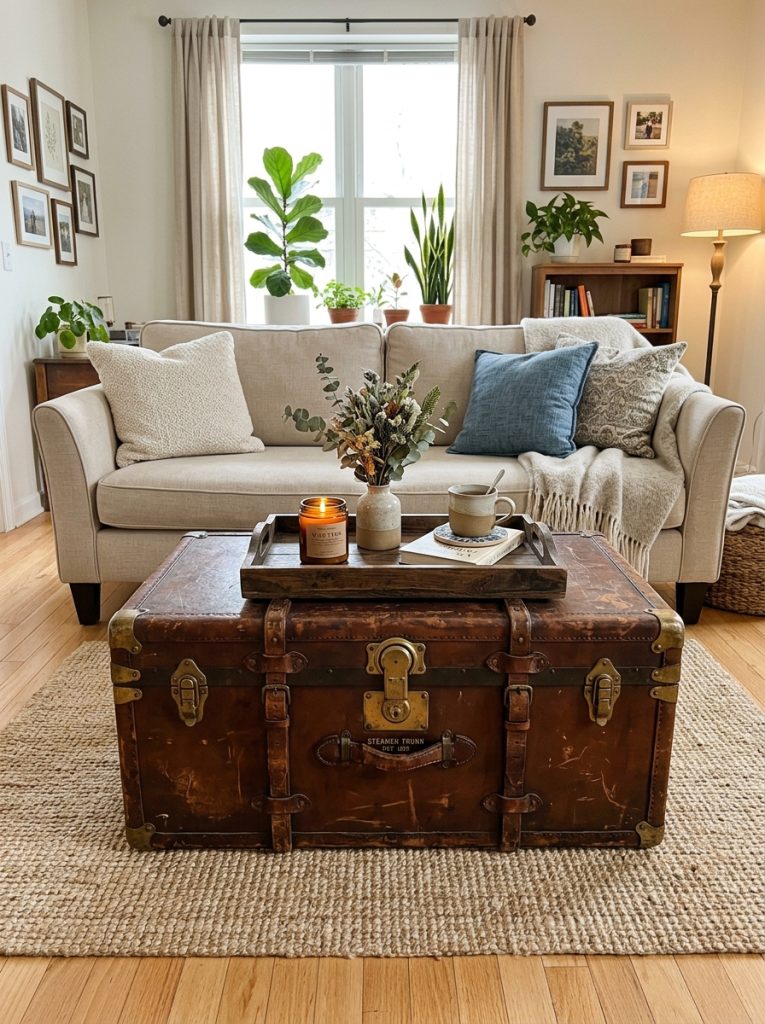
Idea 9: Woven Trunk Coffee Table with Hidden Storage
Setup Method
Utilizing a vintage leather-bound trunk or woven storage chest as a central coffee table provides practical storage space for small apartment living rooms. Select a flat-topped steamer trunk featuring reinforced brass corners, leather straps, and rich aged wood finishes to ensure structural stability. Position the trunk over a large light-toned jute area rug in front of the main couch layout, leaving eighteen inches of legroom clearance. Place a sturdy wooden tray on top of the trunk surface to create a flat, stable platform for drinks, candles, and vase arrangements. Store extra bedding, seasonal throw blankets, and decorative pillows inside the trunk interior to keep primary living areas organized and free from clutter. This dual-purpose furniture selection combines historic character with functional space organization ideal for compact rental floor plans.
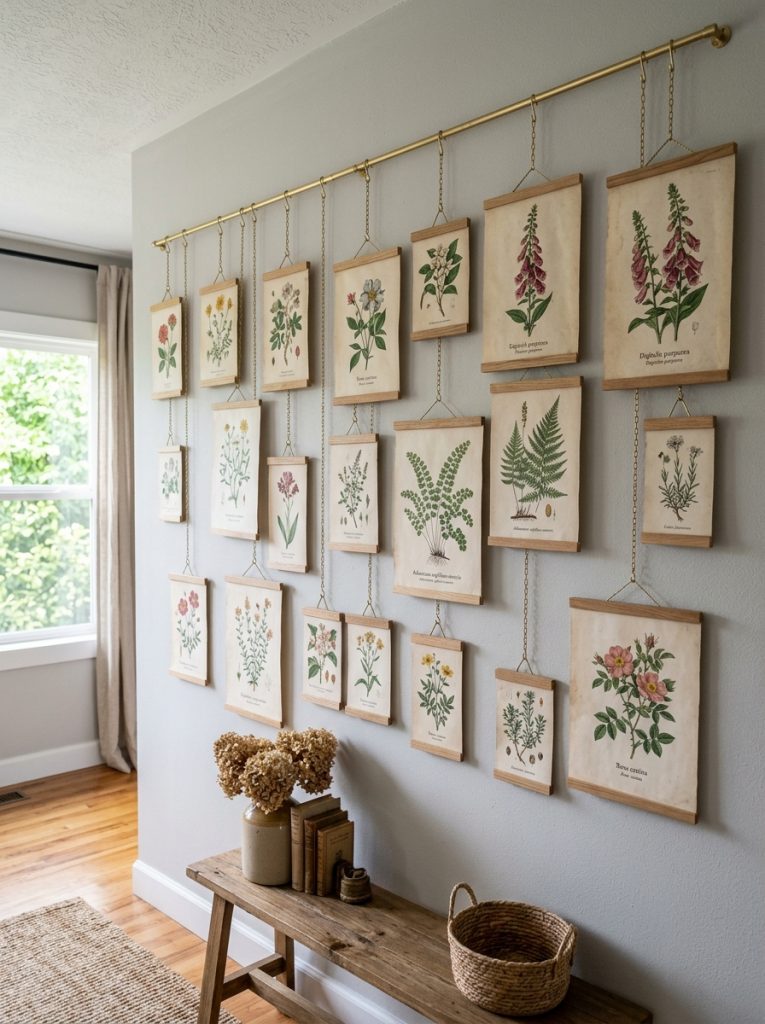
Idea 10: Botanical Print Display on Hanging Brass Rails
How to Make
Hanging vintage botanical art prints from a sleek wall-mounted brass rail offers a flexible display method that updates easily over time. Install a thin horizontal brass rod or picture rail roughly six feet above the floor line using sturdy wall mounting anchors. Thread adjustable brass chains or cotton hanging cords through matching brass clips attached along the length of the rail. Secure vintage botanical prints depicting ferns, medicinal herbs, or vintage fruit illustrations inside lightweight wooden poster hangers. Clamp the poster hangers to the hanging cords, adjusting lengths to display artwork at alternating vertical heights across the wall space. This flexible hanging system avoids multiple wall nail holes while allowing renters to swap artwork, dried botanical wreaths, or small framed photos effortlessly throughout the year.

Common Beginner Mistakes and How to Avoid Them
A common mistake when decorating with classic design elements is overcrowding small living spaces with heavy, dark wooden furniture pieces. Placing multiple large antique wardrobes, dark tables, and heavy carved armchairs in a compact apartment absorbs light and reduces open floor space. To avoid this visual weight, balance substantial timber items with light-colored textiles, clear glass surfaces, and warm neutral paint tones. Another frequent error is mixing too many competing historical eras without a unifying color scheme, which can make living areas look chaotic rather than curated. Restrict your design selection to two or three complementary design eras, such as mid-century modern and classical botanical accents. Ensure all decor selections share a consistent color foundation to maintain logical visual flow throughout the home environment.
Practical Tips for Better Results
Achieving professional results when styling a vintage-inspired apartment relies heavily on thorough cleaning, balanced light management, and proper scale selection. Always condition pre-owned wooden furniture and polish brass hardware before introducing items into clean living spaces to remove accumulated dust and tarnish. Utilize warm LED light bulbs rated around 2700K inside retro lamps to cast a soft, warm glow that enhances rich wood grains and velvet fabrics. When selecting area rugs, choose sizes that extend beneath the front legs of primary seating to anchor room arrangements cleanly. Use removable adhesive mounting products specifically rated for frame weights when hanging artwork in rental apartments to prevent wall damage upon removal. Maintaining a clear ten-inch gap between tabletop surfaces and floating wall displays preserves balanced visual proportions across all room setups.
Styling, Presentation, or Organization Ideas
Maintaining an organized living space around classic furniture pieces depends on using structured storage solutions and keeping horizontal surfaces free from daily clutter. Utilize decorative woven baskets, brass trays, and small wooden boxes to group minor household items like remotes, keys, and charging cables neatly. Arrange decorative books on side tables in structured stacks of three, topping the pile with a small brass object or ceramic vessel to build visual interest. Keep open shelving units organized by alternating between solid books, clear glassware, and small trailing plants to maintain open, breathable visual balance. Use decorative brass hooks installed inside entryways to hang coats, hats, and vintage leather bags neatly off floor areas. This disciplined organization approach ensures that classic decorative items remain the clear focus of your aesthetic home interior.
Budget or Time Planning
Executing a vintage apartment transformation can be managed efficiently by establishing clear budget limits and structured timelines before purchasing decor. Dedicate initial project hours to measuring room dimensions, planning layout sketches, and searching local thrift shops or online secondhand listings for core furniture. Allocate roughly sixty percent of your total budget toward high-impact functional items like a solid teak sideboard, a sturdy storage trunk, or a high-quality area rug. Reserve twenty-five percent for secondary accent lighting, brass floor lamps, and decorative mirrors that brighten compact rooms. The remaining fifteen percent can be directed toward low-cost materials like removable wallpaper, velvet pillow covers, and thrifted art frames that complete the look. Breaking installation tasks into single-day weekend projects prevents overwhelm while allowing for gradual, thoughtful space styling.
Creative Expansion and Advanced Inspiration
For experienced home decorators seeking advanced creative project ideas, customizing pre-owned furniture through careful restoration techniques offers endless design potential. Consider re-covering vintage dining chair seats using patterned jacquard or velvet fabrics to match updated apartment color palettes cleanly. Installing custom architectural wall trim, such as picture frame molding or beadboard paneling using removable adhesive tape, adds rich historical character to plain rental drywall. Advanced crafters can convert vintage hardback book covers into hidden storage boxes or rewire antique oil lamps into functioning electric light fixtures for unique accent lighting. Integrating subtle smart home technology, such as hidden wireless charging pads inside wooden sideboard tops, seamlessly bridges classic aesthetics with modern daily convenience. These sophisticated enhancements allow decorators to build highly personalized living spaces tailored for contemporary comfort.

Post Comment