10 Apartment Inspiration Aesthetic Bedroom Ideas
Designing a personal sanctuary inside a rented space requires a thoughtful approach that balances modern design principles with smart spatial planning. Bedrooms in urban dwellings often feature compact footprints, making intentional decoration crucial for creating a relaxing atmosphere without causing visual clutter. Search trends across popular visual discovery platforms consistently highlight functional interior concepts that merge clean lines, textured textiles, and adaptable storage solutions. Readers exploring this comprehensive guide will gain practical knowledge regarding layout optimization, color palette selection, and strategic lighting installations tailored specifically for rental environments. Understanding how to layer soft furnishings, select versatile furniture pieces, and utilize vertical wall space allows individuals to achieve a elevated living area without making permanent structural modifications. This detailed overview delivers actionable strategies to help transform standard sleeping quarters into structured, visually harmonious retreats that promote rest, productivity, and long-term personal comfort.
Why This Idea Is Trending or Useful
Styling an intimate sleeping space using curated decor concepts continues to grow in popularity due to its high practical value and universal accessibility. Modern renters increasingly seek creative project approaches that enhance small floor plans while reflecting personal taste through handmade accents and soft textures. The appeal of these design strategies lies in their beginner friendly nature, allowing individuals to execute noticeable home improvements using straightforward budget ideas. Integrating a minimalist style layout with warm organic textiles prevents compact rooms from feeling enclosed or cluttered. Furthermore, these trending ideas focus on non-permanent, adaptable enhancements such as freestanding clothing racks, layered lighting fixtures, and floating wall ledges. This accessibility ensures that homeowners and long-term tenants alike can customize their personal quarters systematically without incurring substantial renovation costs or risking damage to original wall finishes and flooring materials during tenancy periods.
Materials and Preparation
Thorough initial planning and surface preparation serve as the foundation for any successful bedroom decorating project. Begin by measuring room dimensions accurately, taking note of doorway swings, window placements, electrical outlet locations, and radiator positions. Essential materials and tools for executing these setups include painter’s tape, non-damaging adhesive wall strips, spirit levels, measuring tapes, cotton linen bedding, warm LED lighting, and lightweight wooden picture frames. Before installing decorative items or moving heavy furniture, clean all floor surfaces, wipe down baseboards, and repair minor drywall imperfections. Establish a unified color scheme using swatches to evaluate how natural daylight and artificial evening lighting interact with fabric textures and paint finishes. Pre-planning spatial flow ensures that nightstands, wardrobes, and bed frames leave clear walking paths, creating an organized environment that balances aesthetic appeal with daily functional utility.
MAIN IDEAS SECTION
Idea 1: Floating Linen Canopy with Warm String Lighting
Step-by-Step Guide
Creating a soft, floating bed canopy establishes an intimate focal point without requiring heavy structural bed posts or permanent ceiling alterations. Begin by installing two lightweight, removable adhesive hooks on the ceiling directly above the head of the bed frame. Thread a slender wooden dowel or a tension rod through the top hem of sheer cream or natural linen curtain panels. Suspend the dowel securely from the ceiling hooks using clear monofilament wire or natural cotton twine, adjusting the height so the fabric drapes gracefully along the sides of the mattress. Weave a strand of warm, copper-wire micro LED fairy lights behind the fabric folds, ensuring the power cord reaches a nearby wall outlet safely. Style the bed beneath using crisp white bedding paired with textured taupe throw pillows to complement the soft draped background. This simple installation adds vertical height, subtle texture, and soothing ambient lighting to compact rental bedrooms.
Idea 2: Minimalist Wooden Headboard with Integrated Ledges
How to Create
Installing a low-profile wooden headboard equipped with a narrow top shelf delivers both rustic character and functional storage space. Select light-toned lumber such as pine, ash, or birch, sanding all exterior surfaces thoroughly to achieve a smooth natural wood finish. Mount the headboard structure securely to the wall studs behind the mattress using sturdy french cleats, maintaining a height that extends approximately twelve inches above the pillows. Utilize the upper integrated ledge to display lightweight framed art prints, small potted succulents, and a compact ceramic reading lamp. Keep the surrounding wall space minimal by selecting neutral-toned paint or soft warm gray bedding to let the natural wood grain remain the primary visual element. This spacesaving structure replaces traditional bulky nightstands, freeing up floor area on both sides of the bed frame while keeping nightly essentials organized and within reach.

Idea 3: Layered Monochrome Textiles and Bouclé Accents
Execution Process
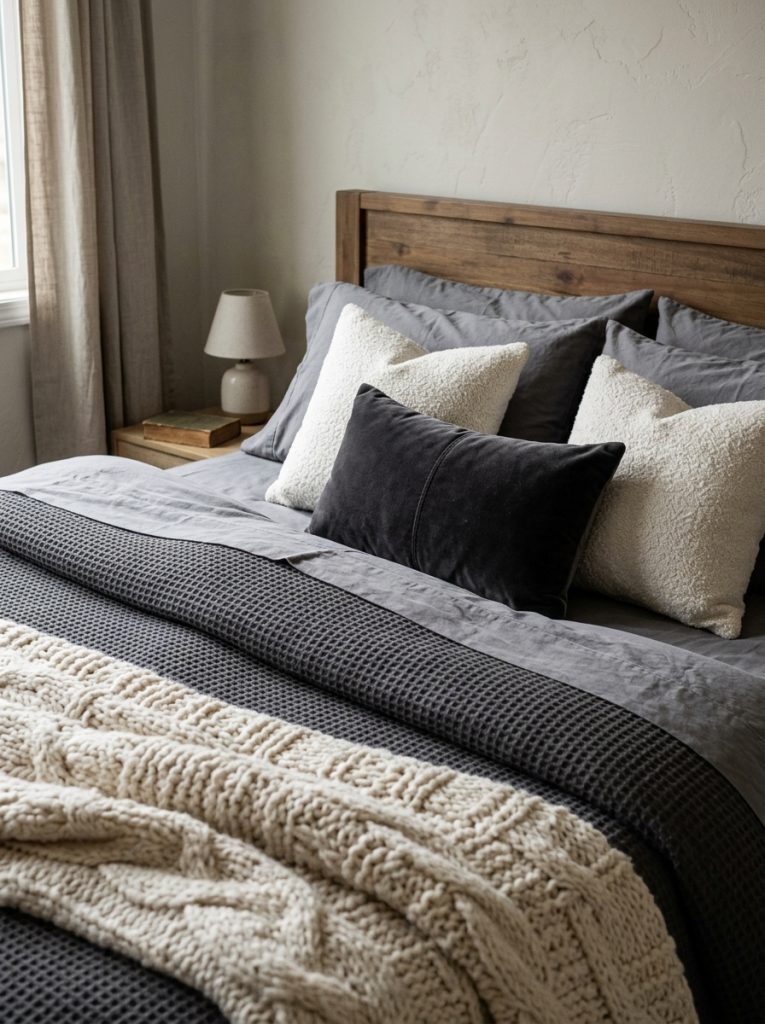
Building depth through varied monochromatic fabric textures creates a cozy, elevated sleeping environment without introducing chaotic color patterns. Start with a foundational base of stonewashed gray or off-white percale cotton sheets spread smoothly across the mattress. Layer a heavy waffle-weave duvet cover in a matching tone over the top, folding the upper portion back to expose the crisp sheets underneath. Arrange two standard sleeping pillows flat against the wall, placing two structured bouclé accent cushions and a single long velvet lumbar pillow directly in front. Drape a chunky wool knit throw blanket diagonally across the foot of the bed, allowing its textured edge to hang slightly toward the floor. This tactile layering technique relies on physical texture differences rather than contrasting colors, producing a clean, restful visual effect that makes smaller rooms feel open, quiet, and refined.

Idea 4: Vertical Ladder Shelf and Botanical Corner
Setup Method
Utilizing a vertical wooden leaning ladder shelf transforms underutilized bedroom corners into organized botanical displays that draw the eye upward. Position a lightweight timber ladder shelf securely against a plain corner wall, placing rubber pads beneath the base feet to prevent slippage on hardwood floors. Arrange small-to-medium potted houseplants—such as pothos, snake plants, and peperomia—on the upper tiers where natural light exposure is optimal. Utilize lower shelves to hold neatly stacked hardcover books, folded linen throws, and small woven storage baskets for minor accessories. Position a small ceramic floor lamp alongside the ladder base to cast upward ambient light through the plant leaves during evening hours. This space-saving organizational method integrates natural greenery into the room layout, improving air quality perception while maintaining clean floor clearance in tight living areas.

Idea 5: Symmetrical Gallery Grid Above the Bedding
Step-by-Step Guide
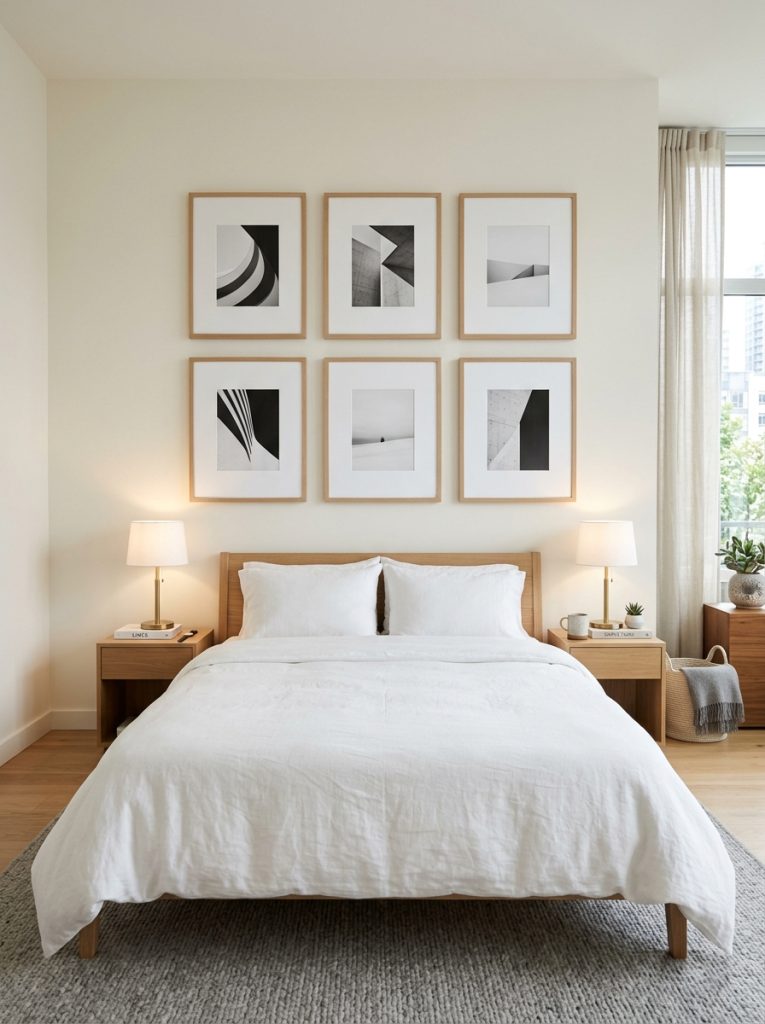
Hanging a perfectly aligned grid of framed black-and-white photography above the bed creates a structured, gallery-like statement wall. Select four to six identical wooden frames featuring wide white mats and clear glass covers to maintain design consistency. Print high-resolution black-and-white architectural photos, line art illustrations, or minimalist landscape prints scaled precisely to the mat openings. Measure the total width of the bed headboard, marking the central wall point to establish a balanced visual axis. Secure the frames to the wall using damage-free adhesive picture strips, leaving exact two-inch spacing between each frame border vertically and horizontally. Pair this structured wall display with low-profile bedding, neutral pillow covers, and matching modern bedside lamps. The precise geometric symmetry brings visual order to the bedroom layout, making the space feel intentionally curated, organized, and balanced.

Idea 6: Warm Terracotta Feature Wall with Brass Fixtures
How to Make
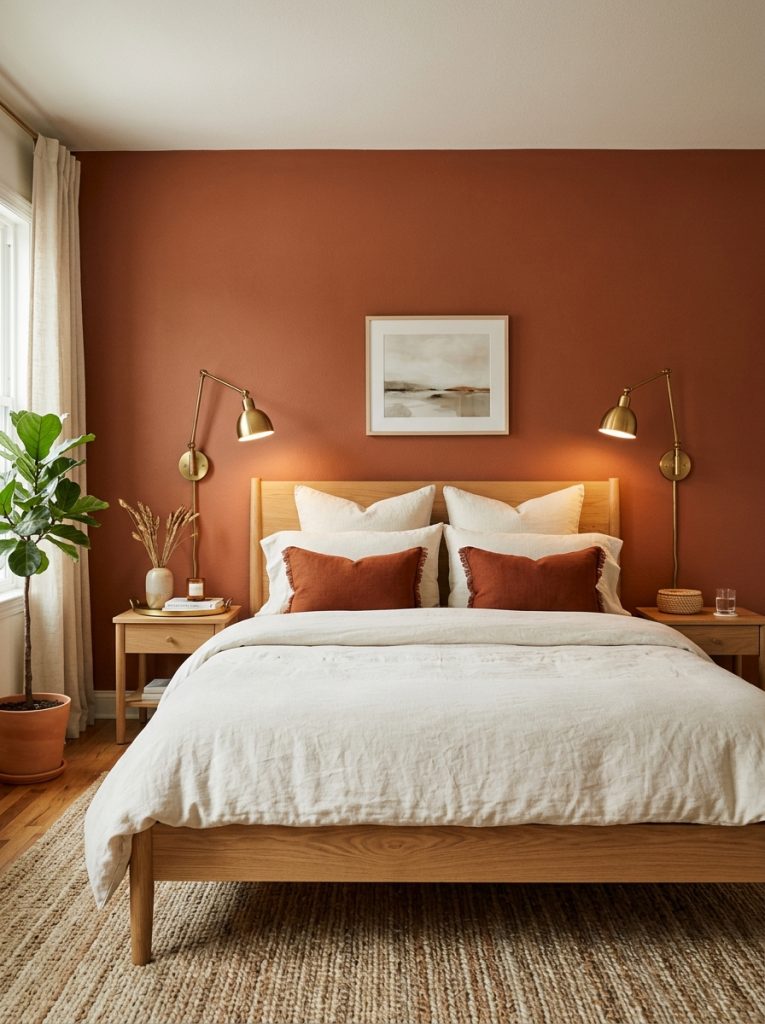
Applying a warm terracotta or dusty clay accent color to the wall behind the bed establishes a rich, grounding backdrop for light-colored furniture. Prepare the chosen accent wall by filling nail holes, sanding smooth, and applying low-VOC matte interior paint using clean roller strokes. Mount a pair of adjustable brushed brass wall sconces on either side of the bed frame, wiring them to nearby outlets to eliminate messy hanging cords. Position a light oak or white upholstered bed frame directly against the terracotta background to generate high visual contrast. Style the mattress using ivory linen duvet covers paired with subtle rust-toned throw cushions to echo the wall color subtly. The combination of earthy wall tones and warm metallic lighting fixtures produces an inviting, high-end look that energizes neutral apartment spaces effectively.

Idea 7: Freestanding Open Wardrobe and Hanging Garment Display
Setup Method
Assembling a sleek, open-concept clothing rack converts daily wardrobe pieces into an intentional visual feature while solving limited closet issues. Select a minimalist metal or wooden garment rack featuring a sturdy top hanging bar and an integrated lower shoe shelf. Position the rack along an open wall section away from direct door swing paths, ensuring adequate clearance for hangers. Organize clothing items by color gradient, hanging long coats, dresses, and shirts on matching slender velvet hangers to maintain a uniform line. Place woven storage baskets on the lower shelf tier to conceal smaller items like socks, scarves, and accessories neatly. Place a full-length arched floor mirror adjacent to the garment rack to reflect light throughout the room. This functional setup keeps everyday clothing accessible while adding boutique-style organization to compact apartment layouts.

Idea 8: Low-Profile Japanese-Inspired Platform Frame
Execution Process
Adopting a low-slung platform bed frame emphasizes floor space and overhead volume, making small apartment bedrooms feel significantly larger. Select a clean wooden platform structure featuring wide perimeter ledges and short, recessed support legs that keep the mattress close to the floor. Position the frame centrally along the main wall, leaving equal walking clearance on both sides of the bed setup. Dress the mattress with neutral-toned linen sheets that tuck tightly under the mattress edges to preserve crisp, sharp geometric lines. Place low ceramic floor lamps or round paper lantern lights directly on the floor near the head of the bed to provide soft, diffuse illumination. Keep surrounding wall decorations minimal, using a single large-scale abstract canvas print mounted low to complement the grounded furniture proportions cleanly.
Idea 9: Built-in Window Bench with Integrated Storage Drawers
How to Create
Transforming an empty window recess into a custom seating nook maximizes functional square footage while creating a cozy reading spot. Measure the window sill length and depth accurately, constructing or placing a low wooden bench cabinet that fits precisely inside the architectural alcove. Install deep pull-out storage drawers or hinged top lids within the bench structure to house extra bed linens, winter blankets, and seasonal clothing. Cover the upper bench surface with a custom-cut high-density foam cushion wrapped in durable cream canvas or heavy linen fabric. Arrange several small square throw pillows against the window frame corners to build an inviting seating nook. Complement the window bench with sheer white privacy curtains mounted near the ceiling to allow natural light to filter through while maintaining privacy from outside viewers.
Idea 10: Rustic Woven Accent Wall with Round Rattan Mirrors
Step-by-Step Guide
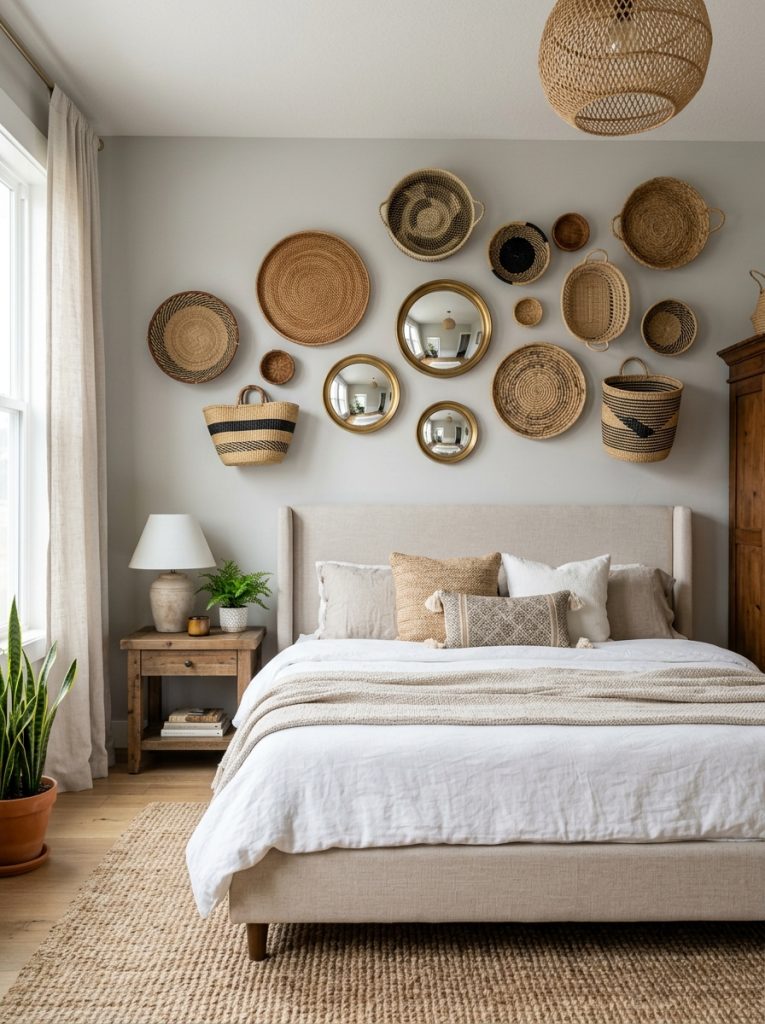
Arranging a collection of woven rattan decorative discs and round convex mirrors on an empty wall introduces organic texture and warmth. Collect five to seven handmade seagrass wall baskets, woven rattan trays, and small circular mirrors in varying diameters. Lay the items flat on the floor to design an asymmetrical layout that balances dark woven patterns with reflective mirror surfaces. Mount the pieces securely onto the target wall using small, damage-free adhesive hooks, starting with the largest central mirror and arranging smaller woven elements outward. Pair this textured wall art display with a neutral upholstered bed, light wood nightstands, and a woven jute area rug beneath the bed frame. The blend of natural fibers and reflective glass surfaces creates a soft, boho-inspired accent feature that complements minimalist bedroom furniture.
Common Beginner Mistakes and How to Avoid Them
A frequent error when decorating compact apartment bedrooms is selecting oversized furniture that restricts natural movement and blocks doorways. Placing bulky nightstands, wide dressers, and massive bed frames into small rooms absorbs floor area and creates visual congestion. To prevent this issue, choose low-profile or floating furniture alternatives that preserve visible floor space underneath. Another mistake is relying on a single overhead lighting fixture, which can create harsh shadows and make rooms feel smaller. Instead, introduce layered lighting sources—such as wall sconces, reading lamps, and warm floor lighting—at varying heights around the room. Additionally, avoid overcrowding walls with numerous small decorative items; grouping artwork into structured grid layouts or hanging a single large focal piece maintains a much cleaner, more spacious environment.
Practical Tips for Better Results
Achieving professional design results relies on attention to scale, fabric selection, and precise installation methods. Always hang window drapery rods higher and wider than the actual window frame, allowing full-length curtain panels to brush the floor surface; this simple adjustment draws the eye upward, creating the illusion of taller ceilings. When selecting bedding materials, prioritize natural breathable fabrics like washed linen or long-staple cotton, which offer durability and a soft, lived-in texture that improves with every wash cycle. Utilize spirit levels and measuring tapes during all wall installation tasks to ensure picture frames and shelving remain aligned. Finally, keep electrical cords hidden by using self-adhesive wire channels painted to match wall colors, eliminating messy trailing cables along baseboards and nightstands.
Styling, Presentation, or Organization Ideas
Maintaining an organized, serene bedroom requires smart storage systems and intentional surface styling across all furniture pieces. Keep nightstand surfaces uncluttered by utilizing decorative trays to hold small personal items like jewelry, reading glasses, and lip balms. Incorporate under-bed storage containers featuring smooth rolling wheels and zip-top fabric covers to keep out-of-season clothing dust-free and out of sight. Group decorative items on dressers in odd numbers—specifically sets of three—combining items of varying heights, such as a tall vase, a medium framed print, and a low ceramic dish. Use uniform wooden or velvet hangers inside open wardrobes and closets to establish visual order. Keeping daily clutter concealed inside structured baskets or drawers allows key decor elements to stand out, maintaining a peaceful atmosphere suitable for rest.
Budget or Time Planning
Executing a comprehensive bedroom transformation efficiently requires establishing realistic cost parameters and project schedules beforehand. Simple upgrades—such as assembling an open wardrobe rack, hanging a gallery grid, or layering fresh bed linens—can easily be completed within a two-to-three-hour window over a single weekend. Larger projects, such as painting a terracotta feature wall or installing custom window bench seating, generally require two full days to allow for proper priming, paint drying, and assembly. Allocate approximately fifty percent of your overall decor budget toward high-impact comfortable essentials like a supportive mattress and quality linen bedding. Reserve thirty percent for practical lighting fixtures and storage furniture, leaving twenty percent for low-cost accent items like throw pillow covers, art prints, and potted houseplants.
Creative Expansion and Advanced Inspiration
For individuals looking to expand their interior decorating skills further, implementing advanced architectural features offers exciting creative potential. Consider installing removable beadboard wall paneling or picture frame molding using rental-safe mounting techniques to add historic character to plain drywall surfaces. Advanced DIY enthusiasts can build custom floating headboards with integrated concealed LED strip lighting behind the panel edges to produce a soft ambient glow across the wall surface at night. Reupholstering vintage padded headboards in textured boucle or velvet fabric allows for complete customization to match shifting color schemes. Integrating smart home automation—such as programable warm lighting timers and motorized blackout window shades—seamlessly blends classic aesthetic styling with modern technological convenience, resulting in a fully tailored personal sanctuary.





Post Comment