10 Thick Hair Layers Ideas
Layered hairstyles for thick hair have become one of the most searched Pinterest ideas because they combine structure, movement, and practical hair management into a single style solution. Thick hair often appears heavy or difficult to shape without proper layering techniques. Strategic layers help remove excess weight while maintaining volume and texture. This article explores 10 thick hair layers ideas designed to improve shape, styling flexibility, and overall hair balance. Each idea focuses on practical haircut structures that work with natural density rather than against it. Readers will learn how different layer placements affect volume, face framing, and styling options. The guide also explains preparation methods, maintenance planning, and easy project styling routines suitable for beginners. These hairstyles support modern design trends ranging from minimalist style cuts to textured aesthetic finishes commonly featured in home salon inspiration boards and beauty-focused Pinterest content. The goal is to provide clear, realistic, and actionable hairstyle ideas that improve manageability while maintaining the fullness that makes thick hair visually striking.
Why This Idea Is Trending or Useful
Thick hair layer styles continue trending because they offer both visual improvement and practical maintenance benefits. Pinterest ideas frequently highlight layered cuts because they create movement, reduce bulk, and support multiple styling options without removing the natural fullness of thick hair. Many people with dense hair struggle with heaviness, uneven volume distribution, and long styling times. Layering techniques solve these issues by improving structure and airflow throughout the haircut. From a design perspective, layered hairstyles align with modern beauty trends focused on natural texture and soft movement. They also adapt easily to DIY styling methods, making them accessible for beginner friendly hair routines at home. Layered cuts support different aesthetics including minimalist style, soft waves, textured finishes, and polished straight looks. They also photograph well, which contributes to their popularity in social media inspiration collections. The flexibility of layered hairstyles allows individuals to personalize their appearance while improving daily styling efficiency and overall hair organization.
Materials and Preparation
Preparing for a layered haircut requires proper planning, suitable tools, and a clear understanding of hair texture and density. Essential materials include professional haircutting scissors, sectioning clips, a spray bottle, combs, mirrors, and heat styling tools for finishing. Thick hair benefits from precise sectioning because even distribution is necessary for balanced layering. Before starting, hair should be washed and detangled thoroughly to allow accurate cutting and shape evaluation. Planning also includes selecting the desired layer type based on hair length, face shape, and styling preference. Long layers create softer movement, while shorter layers increase volume and texture. Beginners experimenting with DIY styling should avoid aggressive cutting and instead focus on gradual shaping techniques. Proper preparation also involves understanding maintenance requirements since layered styles may need regular trimming to preserve structure. This planning process supports more consistent results and helps create layered hairstyles that align with modern design trends, aesthetic balance, and practical daily wear.
Idea 1: Long Feathered Layers for Thick Hair
How to Create
Long feathered layers are designed to soften the heaviness of thick hair while preserving overall length and fullness. This haircut uses gradual, airy layers that blend smoothly from the crown to the ends. The feathering effect creates movement and prevents thick hair from appearing overly dense or boxy. Pinterest ideas frequently feature this layered style because it works with both straight and wavy textures while maintaining a polished aesthetic. The structure also frames the face naturally without creating sharp separation lines. Feathered layering reduces visual bulk and improves styling flexibility, making it suitable for both casual and professional appearances. This haircut supports modern design preferences that emphasize natural flow and lightweight texture.
To create this style, section the hair evenly and begin layering from the mid-length area downward. Use soft angled cuts instead of blunt horizontal lines to maintain smooth blending. Focus on removing weight gradually rather than creating dramatic separation between layers. Blow-dry using a round brush to enhance feathered movement and create soft volume near the ends. A lightweight styling cream can improve texture definition without flattening the hair. Regular trimming helps maintain the airy effect and prevents thick hair from becoming overly heavy again.

Idea 2: Face-Framing Layers with Soft Texture
Step-by-Step Guide
Face-framing layers focus on shaping the front sections of thick hair to soften facial structure and improve styling movement. This layered design creates a balanced transition between shorter front pieces and longer back lengths. It is commonly used in Pinterest inspiration because it highlights facial features while reducing heaviness near the cheeks and jawline. Thick hair benefits from this approach because concentrated layering around the face prevents the hairstyle from appearing overly solid or bulky. The result is a softer and more dimensional appearance that works well with straight, wavy, or lightly curled textures.
To achieve this look, separate the front sections from the rest of the hair and determine the desired framing length. Start with longer face-framing pieces near the chin or collarbone to maintain softness. Blend the layers gradually into the remaining hair using angled cutting methods. Styling involves blow-drying away from the face to emphasize movement and texture. Loose waves can further enhance the dimensional effect. This beginner friendly layered haircut improves manageability while maintaining the fullness associated with thick hair.
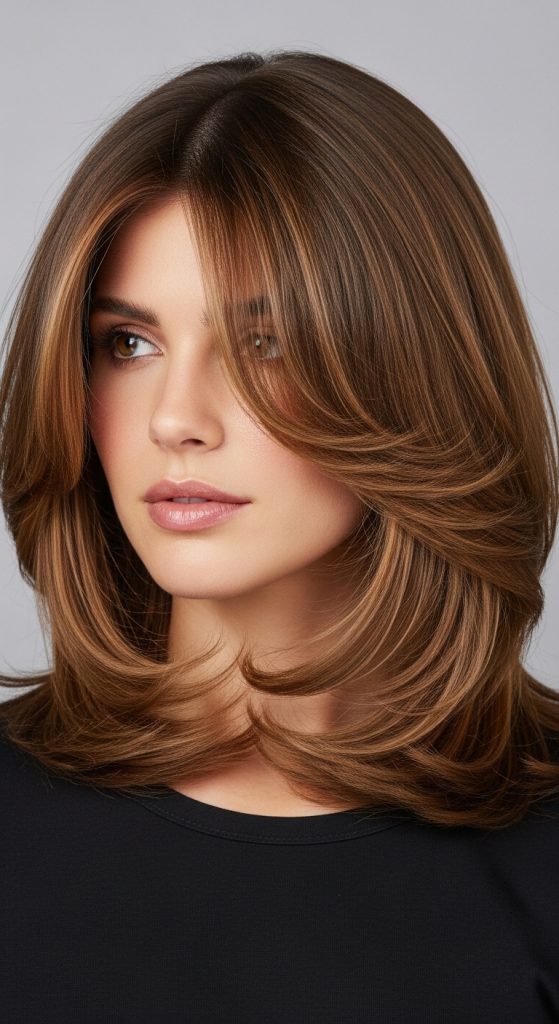
Idea 3: Layered Curtain Cut for Thick Hair
Execution Process
The layered curtain cut combines soft curtain-style framing with structured long layers to create balanced movement throughout thick hair. This style features parted front sections that open around the face while longer layers add flow through the body of the hair. Pinterest ideas often highlight this haircut because it creates a relaxed yet refined aesthetic suitable for many face shapes. Thick hair responds particularly well to curtain layering because the technique distributes volume more evenly and prevents excessive density around the crown.
To create this haircut, establish a center or soft middle part before sectioning the front curtain pieces. Cut these sections at an angle so they sweep naturally away from the face. Add blended layers throughout the hair to reduce heaviness and improve movement. Blow-drying with a large round brush helps shape the curtain effect and maintain volume balance. Texturizing techniques can also be used lightly near the ends for softer definition. This layered style works well for individuals seeking a fashionable yet practical haircut that remains easy to style daily.

Idea 4: Textured Medium-Length Layers
Setup Method
Medium-length textured layers provide a structured haircut that removes bulk while maintaining strong shape and fullness. This style is especially useful for thick hair that becomes difficult to manage at longer lengths. The layered structure creates separation and movement without sacrificing density. Pinterest ideas commonly showcase this haircut with tousled styling because texture enhances the visibility of the layers and creates a modern aesthetic. The medium length also makes styling routines more manageable and adaptable for daily wear.
To create textured medium layers, divide the hair into multiple horizontal sections and begin layering around the shoulder area. Use point-cutting techniques to soften the ends and create natural texture. Avoid blunt cuts that can make thick hair appear heavier. Styling involves using a blow dryer with light volumizing techniques or adding loose waves for additional movement. Texturizing sprays can improve definition while preserving softness. This haircut supports practical styling routines while maintaining a balanced and organized appearance.

Idea 5: V-Cut Long Layers
How to Make
V-cut long layers create a pointed shape at the back of the hair while incorporating graduated layers throughout the length. This design reduces heaviness while preserving dramatic long hair structure. Thick hair works especially well with V-cut layering because the shape distributes density more effectively and creates visible movement. Pinterest inspiration frequently features this haircut due to its elegant silhouette and flowing finish. The shape also enhances natural waves and improves styling dimension.
To create this style, section the hair carefully and establish a central guideline for the V-shape. Cut the outer sections slightly shorter while preserving maximum length at the center back. Add long blended layers throughout the body of the hair to remove excess bulk. Blow-dry using downward smoothing techniques to emphasize the V-shape. Loose curls can further enhance layer visibility and movement. This haircut combines aesthetic structure with practical thickness management.

Idea 6: Shag-Inspired Thick Hair Layers
How to Create
Shag-inspired layers introduce texture and volume separation throughout thick hair using uneven layered placement and soft fringe elements. This haircut focuses on creating movement and reducing visual heaviness through heavily textured shaping. Pinterest ideas frequently showcase shag hairstyles because they create relaxed volume and modern styling flexibility. Thick hair supports shag layering effectively because natural density enhances the textured structure.
To achieve this haircut, layer the hair starting from higher sections near the crown while blending downward into longer ends. Use texturizing methods around the face and crown to create volume variation. A soft fringe or curtain bang can enhance the shag effect. Styling works best with lightweight mousse or texture sprays combined with natural air drying or loose wave techniques. This layered haircut creates a modern and effortless appearance while improving manageability.

Idea 7: Rounded Layers with Volume Balance
Step-by-Step Guide
Rounded layers focus on maintaining a curved shape throughout thick hair to create controlled fullness and smooth movement. This style avoids sharp edges and instead emphasizes soft transitions between layers. Pinterest ideas often feature rounded layering because it creates a polished and balanced silhouette suitable for both straight and wavy textures. Thick hair benefits from this structure because the layering distributes weight evenly around the head.
To create rounded layers, establish a curved cutting guideline beginning near the crown and continuing through the ends. Blend each section gradually to avoid harsh separation. Blow-dry using a round brush to maintain curved shaping and smooth volume distribution. Lightweight smoothing products can improve shine while preserving natural movement. This haircut supports a refined appearance while maintaining practical styling flexibility.

Idea 8: Layered Lob for Thick Hair
Execution Process
The layered lob combines shoulder-length structure with strategic layering to create manageable volume and modern movement. Thick hair often appears heavy in blunt lobs, so layering helps maintain softness and flexibility. Pinterest inspiration regularly highlights layered lobs because they balance sophistication with practical maintenance. The haircut works well for professional environments while remaining adaptable for casual styling.
To create a layered lob, establish a shoulder-length perimeter before adding soft layers through the mid-lengths and ends. Avoid excessive crown layering to maintain balance. Styling can include sleek straight finishes or loose textured waves depending on preference. Regular trims help preserve the structure and prevent uneven bulk accumulation. This haircut provides a balanced combination of organization, movement, and modern design.

Idea 9: Wispy Layers with Soft Ends
Setup Method
Wispy layers use delicate feathered cutting techniques to soften thick hair without removing excessive density. This haircut focuses on creating lightweight movement near the ends while preserving fullness throughout the body of the hair. Pinterest ideas commonly feature wispy layering because it produces soft texture and natural flow. Thick hair benefits from this method because it prevents the hairstyle from looking overly compact.
To create wispy layers, cut thin sections gradually while focusing on softening the outer edges. Avoid heavy thinning techniques that can create uneven texture. Use smoothing blow-dry methods combined with light curling techniques for movement. A lightweight serum can enhance softness and improve separation. This layered style creates a subtle yet effective transformation suitable for multiple hair lengths.

Idea 10: Layered Waves for Thick Long Hair
How to Create
Layered waves combine structured long layers with soft wave styling to create movement, texture, and balanced volume throughout thick hair. This hairstyle is highly visible in Pinterest inspiration collections because waves enhance the dimension created by layered cutting. Thick hair supports wave patterns well due to its natural density and fullness. The layered structure prevents waves from appearing overly heavy while maintaining strong visual volume.
To create this style, begin with long blended layers throughout the hair to remove excess weight. Use curling methods focused on mid-lengths and ends to create soft wave patterns. Avoid tight curls that can increase volume excessively. Finish with light texturizing spray to maintain movement without stiffness. Regular trimming helps preserve wave definition and layer balance. This haircut combines practical styling flexibility with a modern and aesthetic finish.

Common Beginner Mistakes and How to Avoid Them
Many beginners make the mistake of adding too many short layers to thick hair, which can create excessive volume near the crown and make styling difficult. Another common issue is uneven sectioning during DIY trimming, resulting in inconsistent layer balance. Over-thinning thick hair can also weaken structure and create frizz instead of movement. To avoid these problems, layering should be gradual and strategically placed based on hair density and length. Using proper sectioning clips and working slowly improves cutting accuracy. Regular maintenance trims preserve shape and prevent layers from becoming uneven. Beginners should focus on soft blending rather than dramatic cuts when attempting layered styles at home.
Practical Tips for Better Results
Successful layered hairstyles depend on consistent maintenance and proper styling techniques. Lightweight products work better for thick layered hair because heavy creams can flatten movement. Blow-drying with directional airflow improves smoothness and layer definition. Heat protection products help preserve hair quality during styling routines. Scheduling trims every few months maintains structure and prevents bulky regrowth. Using wide-tooth combs reduces breakage and preserves natural texture. These practical habits improve styling efficiency while keeping layered thick hair organized and visually balanced.
Styling, Presentation, or Organization Ideas
Layered hairstyles can be styled in multiple ways depending on the desired aesthetic. Loose waves emphasize movement and texture, while sleek straight styling highlights clean layer transitions. Hair accessories such as clips or low ponytails showcase face-framing layers effectively. Minimalist style approaches focus on smooth finishes and subtle volume, while textured styles create relaxed dimension. Organized styling routines improve consistency and reduce preparation time. Choosing styling methods that complement the layer structure enhances overall appearance and supports long-term manageability.
Budget or Time Planning
Layered haircuts can remain budget friendly with proper maintenance planning. Regular trims help preserve shape and reduce the need for major corrective styling later. Investing in quality cutting tools supports safer DIY maintenance between salon visits. Simple styling routines using minimal products save both time and expense. Medium and long layered styles generally require less daily styling effort compared to heavily structured cuts. Planning regular maintenance schedules improves consistency and keeps thick hair manageable without excessive cost.
Creative Expansion and Advanced Inspiration
Advanced layered hairstyles include combinations such as curtain bangs with textured waves, layered shags with soft fringe details, or blended color techniques that highlight movement. Styling experimentation with braids, half-up arrangements, or loose updos can emphasize layer depth. Combining layering with subtle highlights creates additional visual texture and dimension. Advanced styling tools such as diffuser drying or heatless wave methods further expand styling flexibility. These creative ideas allow thick layered hairstyles to evolve while maintaining practical structure and aesthetic balance.

Post Comment