10 Dining Nook Area Ideas

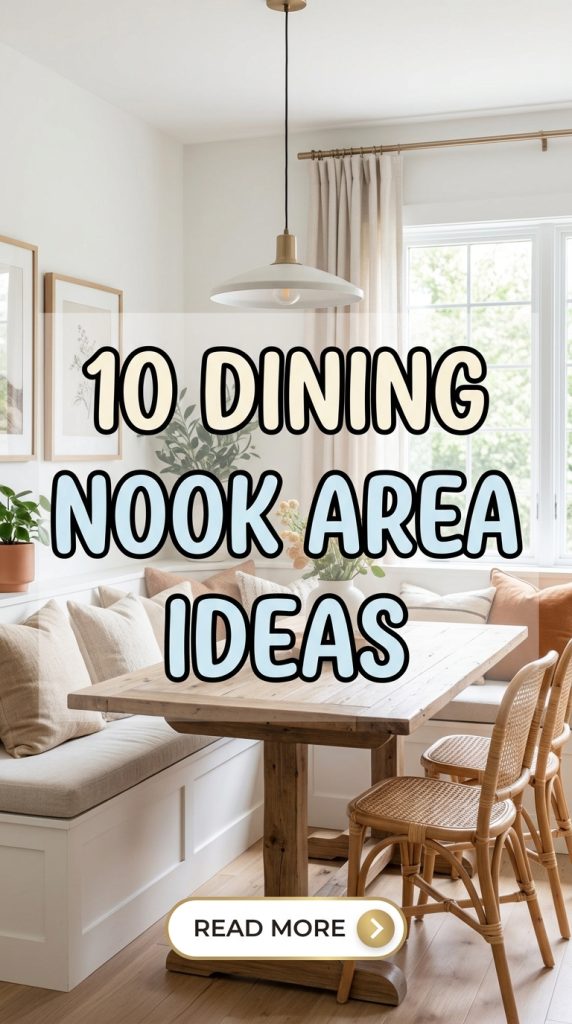
Dining nook areas create comfortable and functional spaces that combine eating, relaxing, and social interaction within a compact and visually organized layout. These Pinterest ideas continue to trend because they transform underused corners, kitchen spaces, and small dining areas into inviting gathering spots with strong aesthetic appeal. A thoughtfully designed dining nook can improve daily routines by creating a dedicated space for meals, coffee breaks, homework, or casual conversations without requiring a formal dining room. Dining nooks also work well in apartments, open-concept homes, and compact kitchens because they maximize available space while maintaining comfort and organization. These setups often include benches, compact tables, layered textiles, and practical storage solutions that support modern design and cozy home decor inspiration. This article explains ten beginner friendly and realistic dining nook area ideas using step by step planning and practical setup methods. Readers will learn how to arrange furniture, select materials, improve comfort, and create stylish dining corners that remain functional and visually balanced.
Why This Idea Is Trending or Useful
Dining nook areas remain popular because many homeowners now prefer multifunctional spaces that support both dining and everyday living activities. Pinterest inspiration frequently highlights cozy eating corners because they improve comfort while making kitchens and living areas feel more connected and welcoming. These setups are useful because they maximize unused corners, window spaces, and compact layouts without requiring major renovations or oversized furniture. Dining nooks also support modern interior trends including minimalist style, Scandinavian design, farmhouse kitchens, and contemporary apartment layouts. Another reason these ideas continue trending is accessibility. Many dining nook arrangements can be created using affordable DIY methods, repurposed furniture, and compact seating solutions suitable for beginners. Dining nooks also encourage more relaxed and social dining experiences compared to traditional formal dining rooms. The combination of efficient organization, aesthetic presentation, and practical functionality makes dining nook areas highly valuable for modern homes and apartments with limited space.
Materials and Preparation
Careful preparation helps create a dining nook area that remains comfortable, organized, and visually connected to the surrounding room design. Begin by measuring the available space carefully to determine how much room can support seating, table placement, and comfortable movement around the area. Common materials include benches, dining chairs, compact tables, rugs, cushions, storage seating, floating shelves, pendant lighting, and decorative accessories. Built-in benches or multifunctional furniture work especially well because they improve organization while maximizing floor space. Neutral fabrics and natural wood finishes often support cozy and modern design aesthetics while blending naturally with existing home decor. Lighting should also be planned carefully because dining areas require balanced illumination during both daytime and evening use. Organizing the furniture layout before purchasing materials helps prevent overcrowding and improves room flow. Practical planning and balanced material choices create dining nook areas that feel welcoming, efficient, and visually cohesive within the home.
Idea 1: Window Bench Dining Nook
How to Create
A window bench dining nook creates a bright and relaxing eating area that uses natural light to improve comfort throughout the day. Begin by placing a cushioned bench beneath a large window paired with a compact round or rectangular dining table. Add soft pillows and textured seat cushions in neutral colors to create warmth while maintaining a clean and organized appearance. Floating shelves or small decorative accents nearby can improve presentation without overcrowding the layout. Sheer curtains or light linen drapes help soften sunlight while preserving brightness during meals. Natural wood textures and woven fabrics work especially well because they support cozy and aesthetic home decor inspiration. Storage compartments beneath the bench can organize table linens, cookbooks, or decorative accessories while reducing clutter. This setup method remains beginner friendly because it transforms unused window space into a functional and visually balanced dining nook suitable for both small apartments and larger kitchens.
Idea 2: Scandinavian Dining Corner
Step-by-Step Guide
A Scandinavian-inspired dining nook combines minimalist style, soft textures, and practical organization to create a calm and modern eating area. Begin with a light wood bench or slim dining chairs positioned around a compact table in neutral tones such as white, cream, beige, or pale gray. Add textured cushions and a knitted throw blanket to introduce warmth without creating visual clutter. Floating shelves or woven baskets nearby can organize dining accessories while preserving open space throughout the room. Natural daylight is important for Scandinavian interiors, so large windows and sheer curtains help maintain brightness and openness. Pendant lighting with simple shapes and soft illumination strengthens the clean and functional atmosphere. This setup works especially well in apartments and compact homes because the minimalist structure helps the dining nook feel larger and more organized. Balanced furniture spacing and simple decorative details preserve the peaceful appearance associated with Scandinavian-inspired interiors.
Idea 3: Rustic Farmhouse Dining Area
Setup Method
A rustic farmhouse dining nook creates a warm and welcoming atmosphere inspired by countryside interiors and natural materials. Begin with a wooden bench or farmhouse-style chairs arranged around a textured wood dining table. Add woven seat cushions, layered fabrics, and soft neutral textiles to improve comfort while supporting the rustic aesthetic. Decorative elements such as ceramic vases, woven baskets, or small potted plants can improve the cozy appearance without reducing functionality. Warm pendant lighting or lantern-style fixtures help create a relaxed environment suitable for everyday meals and family gatherings. Earth-tone color palettes including beige, cream, brown, and muted green work especially well because they support natural warmth and visual balance. This setup remains beginner friendly because many farmhouse-inspired details can be created using simple DIY methods or repurposed materials. Organized furniture placement and balanced decoration help maintain both practicality and aesthetic harmony throughout the dining nook area.

Idea 4: Small Apartment Dining Nook
Execution Process
A small apartment dining nook maximizes compact spaces by using efficient furniture arrangements and multifunctional seating solutions. Begin by selecting a slim bench, compact chairs, or foldable seating positioned around a narrow table designed for smaller layouts. Floating shelves or wall-mounted storage units nearby can organize dishes, cups, or decorative accessories while preserving floor space. Neutral colors and light fabrics help make the dining area feel more open and visually spacious. Adjustable lighting fixtures improve functionality during evening meals without requiring oversized lamps or decorative pieces. This setup works especially well in studio apartments and compact kitchens because it combines dining, storage, and social seating into one organized layout. Rugs placed beneath the table can help define the nook visually without disrupting movement throughout the room. Proper furniture sizing and balanced spacing are essential because overcrowding may reduce comfort and make compact interiors feel visually cluttered instead of inviting.
Idea 5: Bohemian Dining Nook Space
How to Make
A bohemian dining nook combines layered textures, relaxed seating, and natural materials to create a creative and comfortable eating area. Begin with a wooden bench or low-profile seating arrangement layered with patterned cushions and textured blankets. Add woven pendant lighting, hanging plants, and natural wood accents to strengthen the bohemian atmosphere while maintaining visual warmth. A round or oval table often works best because it softens the layout and supports relaxed dining arrangements. Woven baskets or open shelving nearby can organize dining essentials while contributing to the handmade aesthetic. Earth-tone colors combined with warm lighting create a cozy atmosphere suitable for casual meals and social gatherings. This setup works especially well for Pinterest inspiration because the layered textiles and artistic styling photograph beautifully while remaining practical for daily use. Balanced decoration and organized furniture placement are important because excessive accessories may reduce comfort and create visual clutter within the nook.
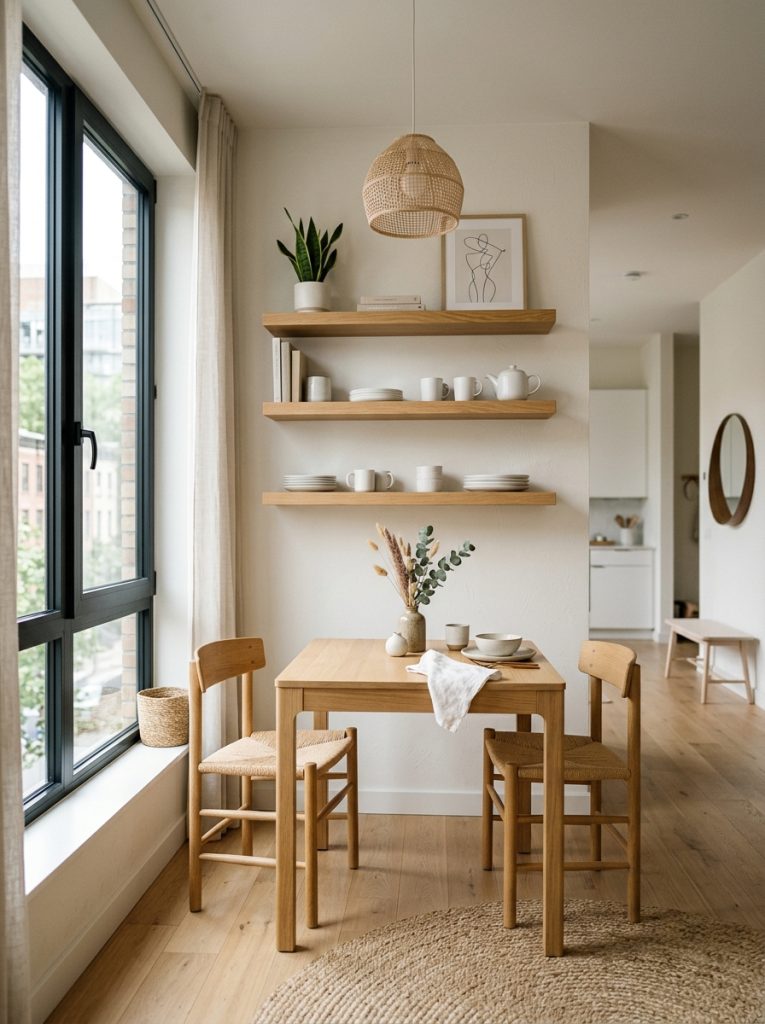
Idea 6: Modern Black and White Dining Area
How to Create
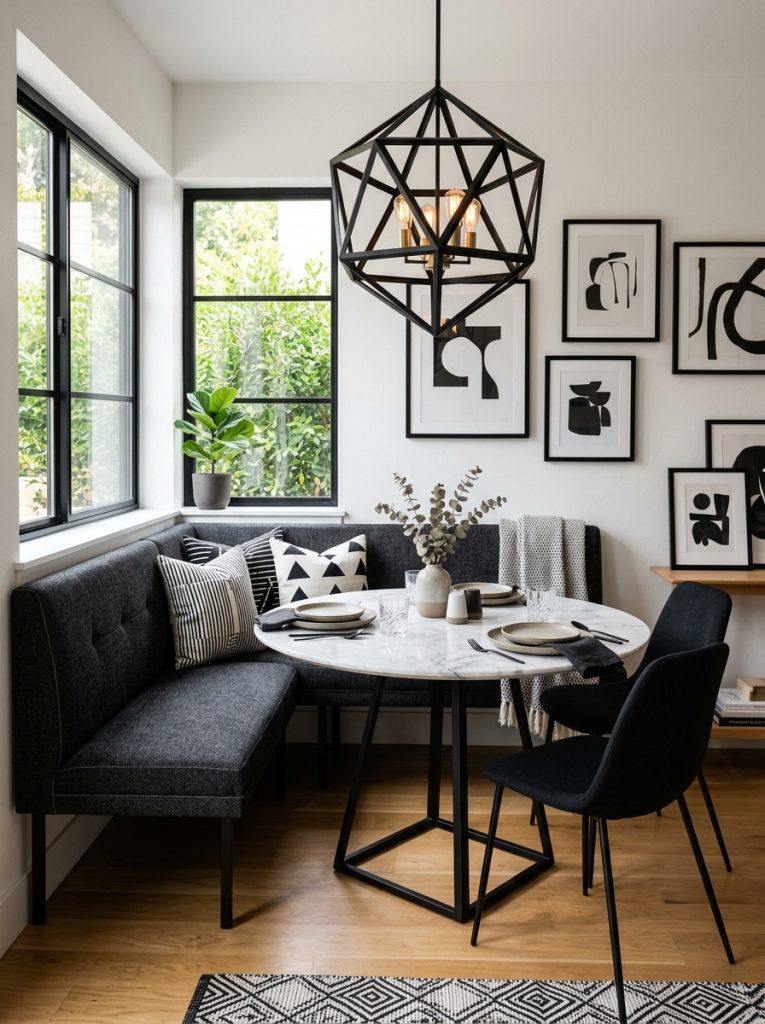
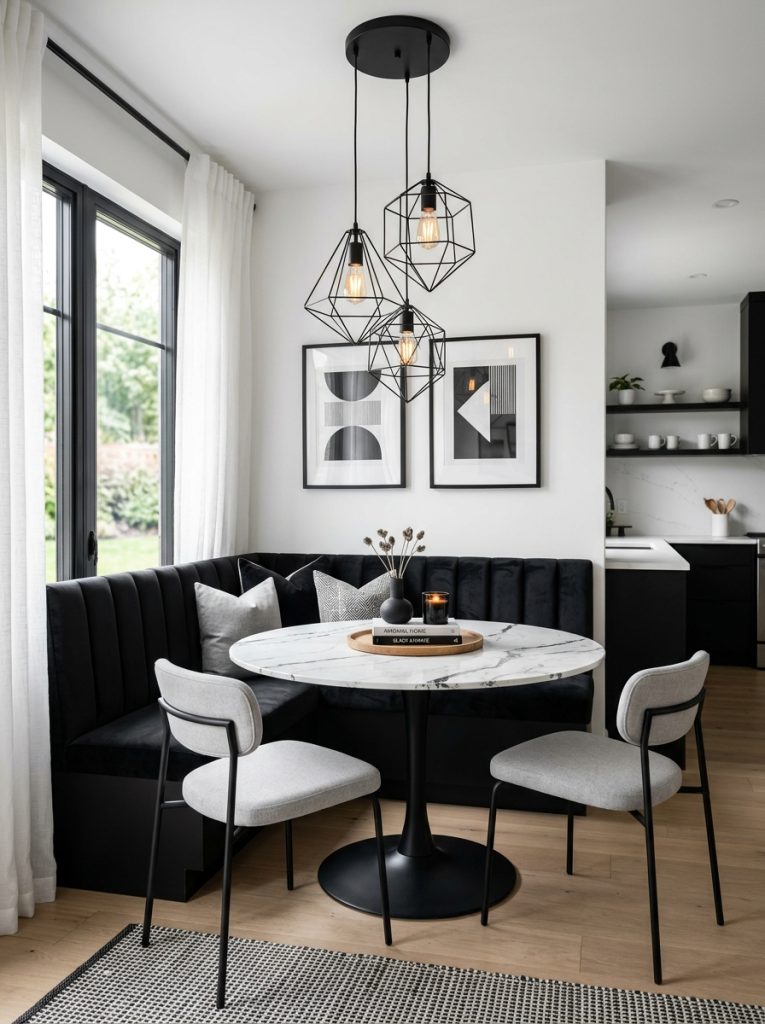
A modern black and white dining nook creates a sleek and organized eating space with strong visual contrast and clean structure. Begin by placing black upholstered seating or minimalist dining chairs around a white or marble-inspired dining table. Soft cushions and textured fabrics help warm the space while maintaining the modern aesthetic. Minimalist wall decor, geometric pendant lights, or floating shelves can improve presentation without overcrowding the layout. Large windows and natural daylight help soften darker elements and maintain openness throughout the dining area. Neutral flooring and subtle decorative accents strengthen the clean and contemporary appearance associated with modern design. This setup works especially well in contemporary apartments and open-concept kitchens because it combines functionality with stylish organization. Proper spacing between furniture pieces and organized surface arrangements are essential because modern interiors rely on simplicity, balance, and uncluttered layouts rather than excessive decoration or layered accessories.
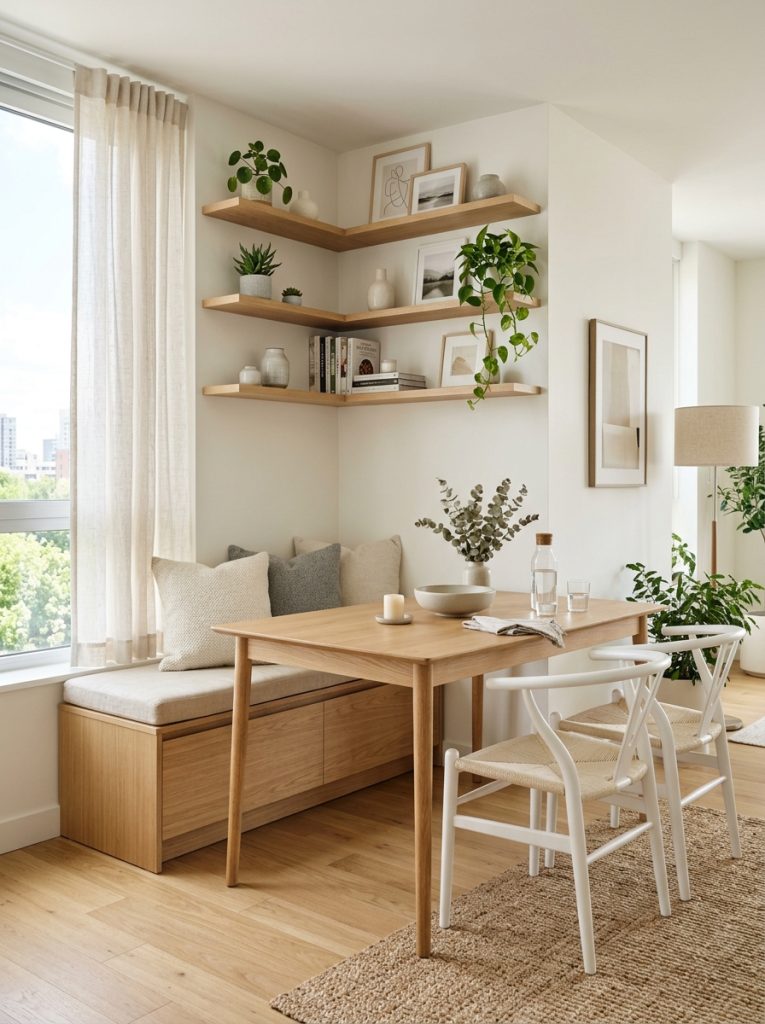
Idea 7: Cozy Breakfast Nook
Step-by-Step Guide
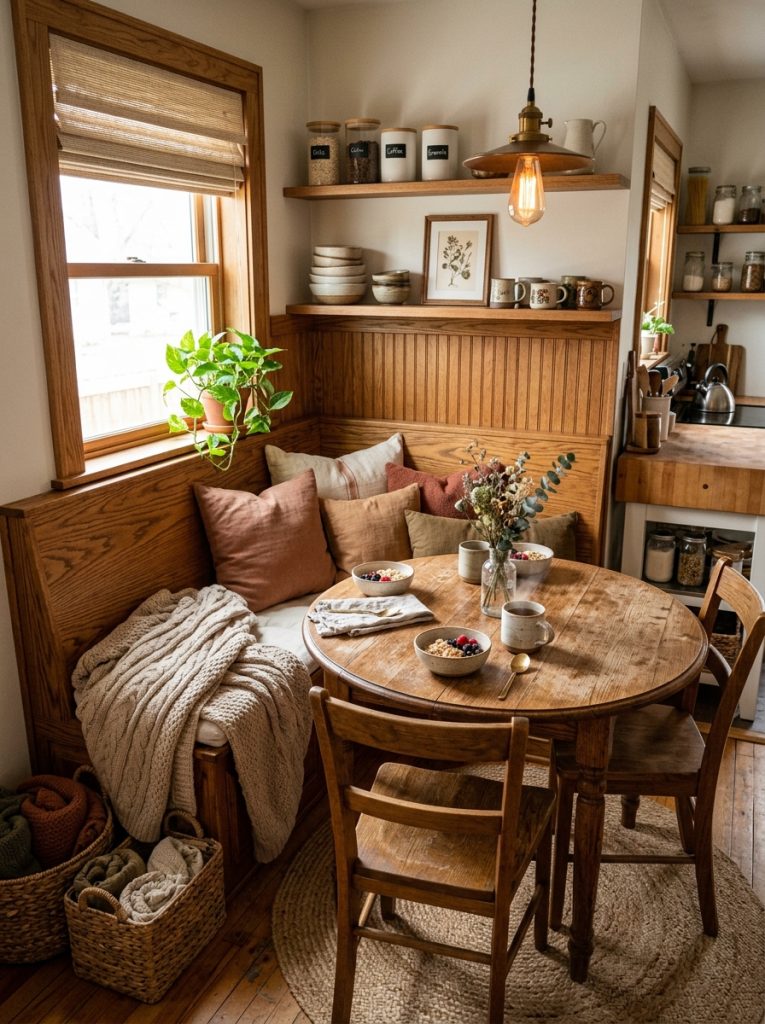
A cozy breakfast nook creates a warm and functional dining area designed for casual meals and relaxed daily routines. Begin by placing a storage bench or cushioned seating arrangement around a compact table positioned in a quiet kitchen corner or beside a window. Add soft pillows, textured blankets, and woven fabrics to improve comfort while creating a welcoming atmosphere suitable for coffee breaks and family breakfasts. Floating shelves or slim cabinets nearby can organize dishes, cups, or decorative accessories neatly. Warm lighting from pendant fixtures or wall-mounted lamps improves visibility and helps define the nook visually. Neutral colors combined with natural wood finishes create a calm appearance while supporting cozy home decor inspiration. This setup remains beginner friendly because it combines seating, storage, and practical organization into one efficient layout suitable for both small and medium-sized homes. Organized arrangements help maintain comfort and long-term functionality throughout the dining nook area.
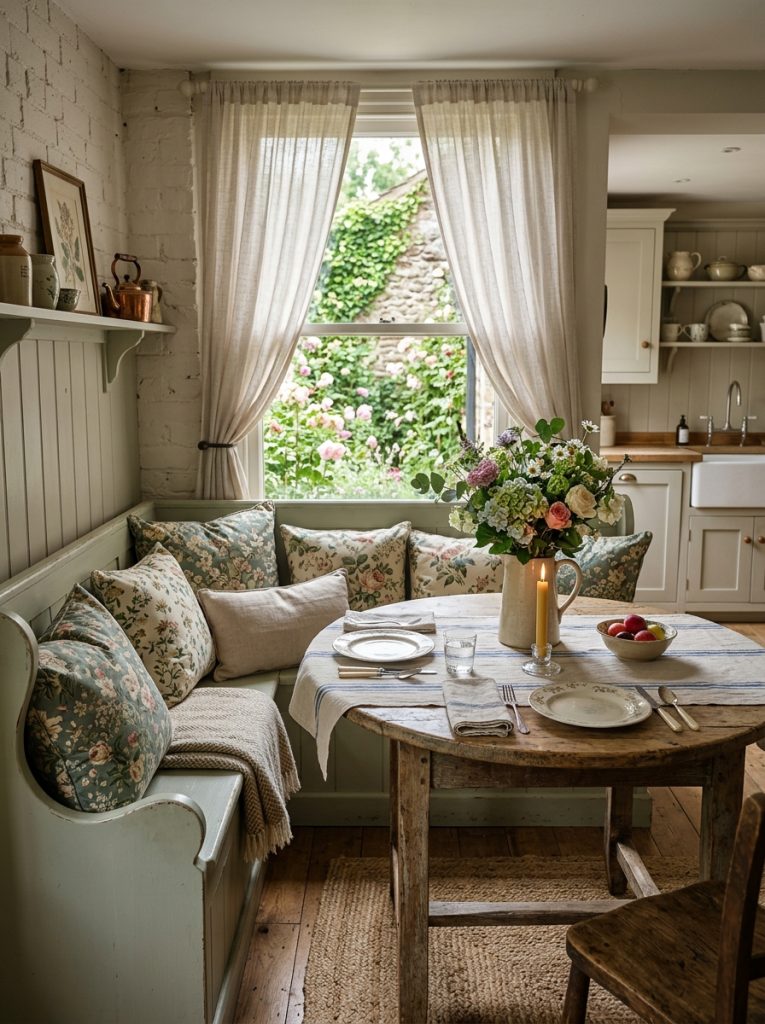
Idea 8: Minimalist Dining Nook Layout
Setup Method
A minimalist dining nook focuses on clean organization, simple furniture, and open visual balance throughout the eating area. Begin with a slim bench or lightweight dining chairs paired with a compact table in neutral shades such as white, beige, soft gray, or light wood finishes. Avoid excessive decoration because minimalist interiors depend on uncluttered layouts and practical furniture placement. Floating shelves or hidden storage systems can organize essentials while preserving open floor space throughout the room. Soft natural fabrics and subtle textures create warmth while maintaining the clean aesthetic. Large windows or soft pendant lighting strengthen the calm atmosphere central to minimalist style interiors. This setup works especially well in modern apartments and compact homes because the simple structure helps rooms feel more spacious and organized. Proper spacing between seating, tables, and accessories is essential because minimalist design relies on openness and visual balance rather than heavy furniture or layered decorative elements.
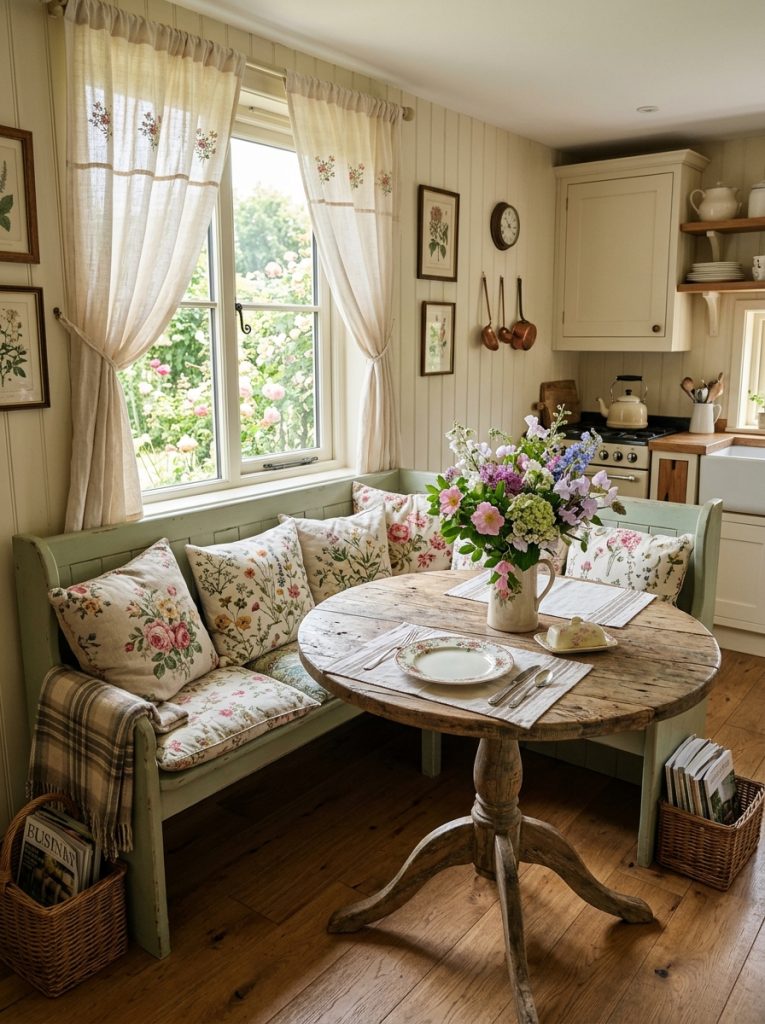
Idea 9: Cottage-Style Dining Nook
How to Make
A cottage-style dining nook creates a soft and welcoming atmosphere inspired by traditional countryside interiors and handmade decoration. Begin with a painted wooden bench or classic dining chairs arranged around a round or oval table featuring natural wood textures. Add floral cushions, layered fabrics, and textured curtains to strengthen the cottage-inspired aesthetic while improving comfort. Decorative details such as ceramic dishes, framed artwork, or fresh flowers can improve presentation without making the nook feel crowded. Warm lighting from pendant lamps or wall sconces helps maintain a cozy atmosphere during evening meals. Light neutral tones combined with pastel accents create visual warmth while supporting the relaxed cottage-style appearance. This setup works especially well in family kitchens and breakfast areas because it combines comfort, organization, and aesthetic charm within a compact dining layout. Balanced decoration and organized furniture placement help preserve calmness and functionality throughout the dining nook area.

Idea 10: Luxury Lounge Dining Nook
Execution Process
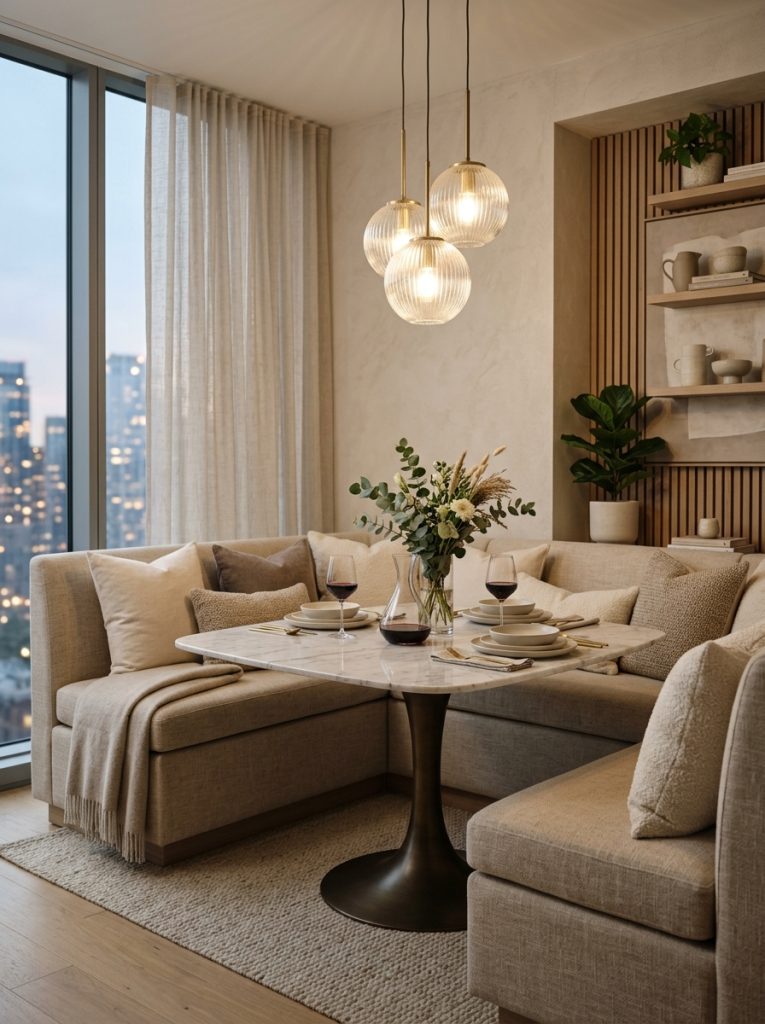
A luxury lounge dining nook creates an elegant and multifunctional eating space designed for both dining and relaxation. Begin with upholstered bench seating or plush dining chairs arranged around a polished wood or marble-inspired table. Add layered cushions and textured fabrics in neutral tones to improve comfort while strengthening the sophisticated atmosphere. Warm pendant lighting, decorative accents, and soft curtains help create a refined environment suitable for meals and gatherings. Neutral color palettes combined with subtle metallic details or textured surfaces support modern luxury interior trends without overwhelming the layout visually. Floating shelves or decorative storage units nearby can organize dining accessories while contributing to the polished appearance of the space. This setup works especially well in open-concept homes because the lounge-style seating creates a multifunctional dining environment suitable for both casual and formal use. Organized layouts and carefully selected materials help maintain elegance while supporting long-term comfort and practicality.
Common Beginner Mistakes and How to Avoid Them
One common beginner mistake is selecting oversized furniture that overwhelms the dining nook area and restricts movement throughout the room. Measuring carefully before purchasing seating or tables helps prevent this issue. Another frequent problem involves overcrowding the nook with excessive decorative accessories, which may reduce comfort and create visual clutter instead of warmth. Organized layouts and balanced decoration choices improve both functionality and appearance. Poor lighting planning is another issue because dining areas require comfortable illumination during daytime and evening use. Combining pendant fixtures with natural daylight usually produces better results. Many beginners also ignore storage opportunities that could improve organization in smaller kitchens or apartments. Benches with hidden storage and floating shelves help maximize efficiency while preserving open floor space. Careful planning, practical furniture sizing, and organized decoration help create dining nooks that remain comfortable, visually balanced, and easy to maintain.
Practical Tips for Better Results
Using light color palettes is one of the most effective ways to make dining nook areas feel larger and brighter. Neutral shades such as white, cream, beige, and pale gray reflect natural light while supporting modern design aesthetics. Layered textures including woven cushions, linen fabrics, and soft rugs improve comfort without requiring bulky furniture arrangements. Compact tables and multifunctional benches often work best because they improve movement while maximizing functionality throughout the room. Adjustable lighting is also important because dining spaces require balanced illumination after sunset. Beginners should focus on practical furniture layouts before adding decorative accessories to ensure the nook remains organized and comfortable. Floating shelves and hidden storage systems help reduce clutter while maximizing available space. Balanced furniture placement, thoughtful lighting choices, and organized decoration create dining nook areas that remain visually appealing and practical for long-term daily use.
Styling, Presentation, or Organization Ideas
Dining nook areas become more visually successful when integrated carefully into the surrounding room design. Coordinating seating fabrics, wood finishes, and decorative colors with nearby cabinetry or flooring creates stronger visual consistency throughout the home. Layered lighting such as pendant fixtures, wall sconces, and natural daylight can help define the dining area while improving comfort during meals. Rugs placed beneath the table visually separate the nook from the rest of the room without requiring additional dividers. Minimalist interiors often benefit from clean lines and neutral colors, while farmhouse or cottage-inspired spaces pair well with layered textures and natural materials. Small plants, ceramic decor, and woven baskets provide decoration without overwhelming the layout. Organized storage systems maintain clean surfaces and reduce clutter around the dining area. Balanced styling transforms the nook into both a functional eating space and an aesthetic home decor feature inspired by modern Pinterest ideas.
Budget or Time Planning
Dining nook areas can be created successfully using both affordable DIY methods and more advanced renovation upgrades depending on the available budget and room size. Many beginner friendly setups require only a compact bench, small table, cushions, and lighting fixture to create a functional dining area. Repurposing existing furniture or using secondhand decor can reduce costs significantly while maintaining strong visual presentation. More advanced projects involving built-in seating, custom storage, or luxury finishes may require additional planning and installation time. Organizing the project into smaller stages helps simplify the process and improve budget management. Start with seating and table placement first, then gradually add lighting, textiles, and decorative accessories over time. Measuring the room carefully before purchasing materials prevents unnecessary spending and improves overall organization. Careful planning and realistic budgeting help create dining nook areas that remain visually cohesive, practical, and manageable for both small and large homes.
Creative Expansion and Advanced Inspiration
After creating a basic dining nook area, many homeowners expand the space into a more personalized and multifunctional gathering zone. Additional creative ideas may include hidden storage compartments, layered lighting systems, built-in shelving, or multifunctional benches that improve efficiency and comfort. Some dining nooks also incorporate coffee stations, decorative display shelves, or workspace corners to support different daily routines. Advanced inspiration often combines modern design with handmade decoration, natural wood textures, and minimalist organization systems to create visually balanced interiors. Seasonal updates such as textured blankets during winter or lighter fabrics during summer can refresh the nook throughout the year. Vertical storage solutions and compact furniture remain especially useful because they maximize functionality without overcrowding the layout. Expanding gradually from a simple beginner friendly setup into a more detailed arrangement allows the dining nook to evolve naturally while maintaining organization, comfort, and aesthetic home decor appeal.





Post Comment