10 Dining Nook Attached to Kitchen Ideas
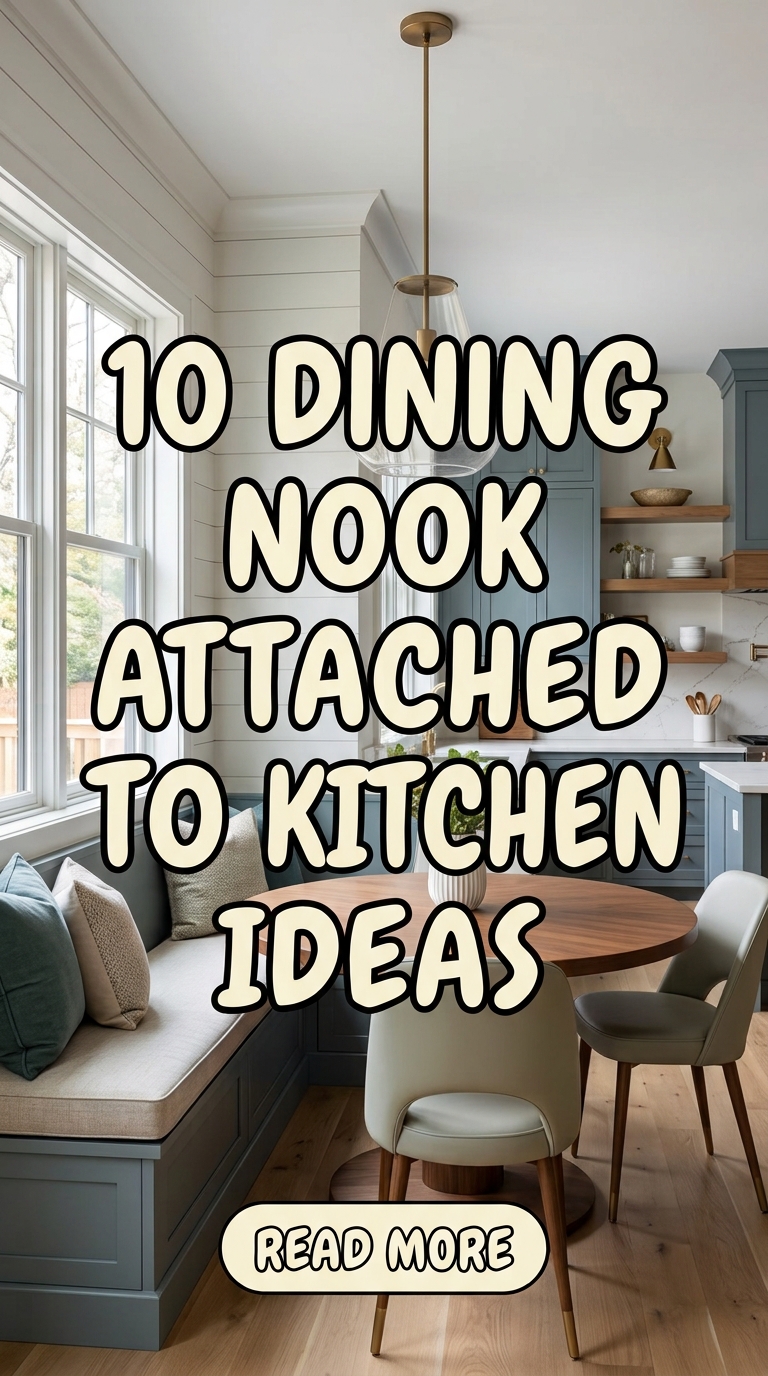
A dining nook attached to the kitchen is a practical way to create a comfortable eating area while maximizing available space. Whether incorporated into a large open-concept layout or a compact apartment kitchen, a well-designed dining nook provides a welcoming place for everyday meals, casual conversations, and family gatherings. Pinterest ideas featuring kitchen dining nooks continue to inspire homeowners because they combine efficient space planning with attractive home decor and functional furniture arrangements. The right combination of seating, lighting, storage, and decorative accents can transform an unused kitchen corner into a stylish extension of the cooking area. This guide presents ten creative dining nook ideas connected to the kitchen, offering practical setup methods, organization tips, and styling inspiration that help create a comfortable, beautiful, and functional dining space suitable for everyday living.
Why Kitchen Dining Nooks Are Trending
Kitchen dining nooks have become increasingly popular because they make efficient use of available floor space while creating a warm and inviting atmosphere for daily meals. Modern homes often emphasize open layouts where cooking, dining, and socializing occur within the same area, making attached dining nooks an ideal solution. Pinterest inspiration highlights these spaces because they combine practical organization with comfortable seating and thoughtful home decor. Many dining nooks require only simple furniture, making them beginner friendly and accessible for homeowners working with different budgets. They also provide flexible seating for family breakfasts, homework sessions, remote work, or casual entertaining. Whether designed in a modern, farmhouse, Scandinavian, or minimalist style, these dining areas enhance both functionality and the overall aesthetic of the kitchen.
Materials and Preparation
Before creating a kitchen dining nook, measure the available area carefully to determine the most suitable furniture arrangement. Gather practical materials including a dining bench, chairs, compact dining table, cushions, area rug, pendant light, floating shelves, decorative artwork, indoor plants, and storage baskets if needed. Choose furniture that fits comfortably within the available space while allowing easy movement around the kitchen. Coordinate wood finishes, fabrics, and decorative accessories with existing cabinetry and countertops to create a cohesive appearance. Consider nearby electrical outlets for lighting or charging devices if the nook will also serve as a workspace. Careful planning ensures the finished dining area remains comfortable, organized, and visually balanced while supporting everyday use.
Idea 1: Built-In Corner Bench Dining Nook
How to Create
A built-in corner bench creates one of the most efficient dining nook layouts by maximizing seating without occupying unnecessary floor space. Install an L-shaped bench along two kitchen walls and pair it with a compact rectangular or round dining table sized to allow comfortable movement around the area. Add thick upholstered cushions together with decorative pillows that coordinate with the surrounding kitchen color palette. Hidden storage compartments beneath the bench provide practical organization for table linens, serving dishes, or seasonal decorations. Hang a pendant light directly above the table to define the dining zone while creating a warm atmosphere during meals. Finish the space with framed artwork or floating shelves that personalize the nook without overwhelming the walls. This layout offers comfort, functionality, and timeless appeal.

Idea 2: Modern Window Dining Nook
How to Make
Positioning a dining nook beside a large kitchen window creates a bright and welcoming environment that benefits from natural daylight throughout the day. Install a narrow bench beneath the window or use a pair of upholstered chairs paired with a compact dining table. Layer comfortable cushions on the seating while adding a simple table centerpiece such as fresh flowers or greenery. Sheer curtains soften incoming sunlight without blocking outdoor views, helping the space feel open and airy. A neutral color palette combined with natural wood furniture reinforces a clean modern design while maintaining visual warmth. This beginner friendly setup creates an inviting breakfast area suitable for both everyday dining and casual entertaining.

Idea 3: Farmhouse Kitchen Dining Corner
Step-by-Step Guide
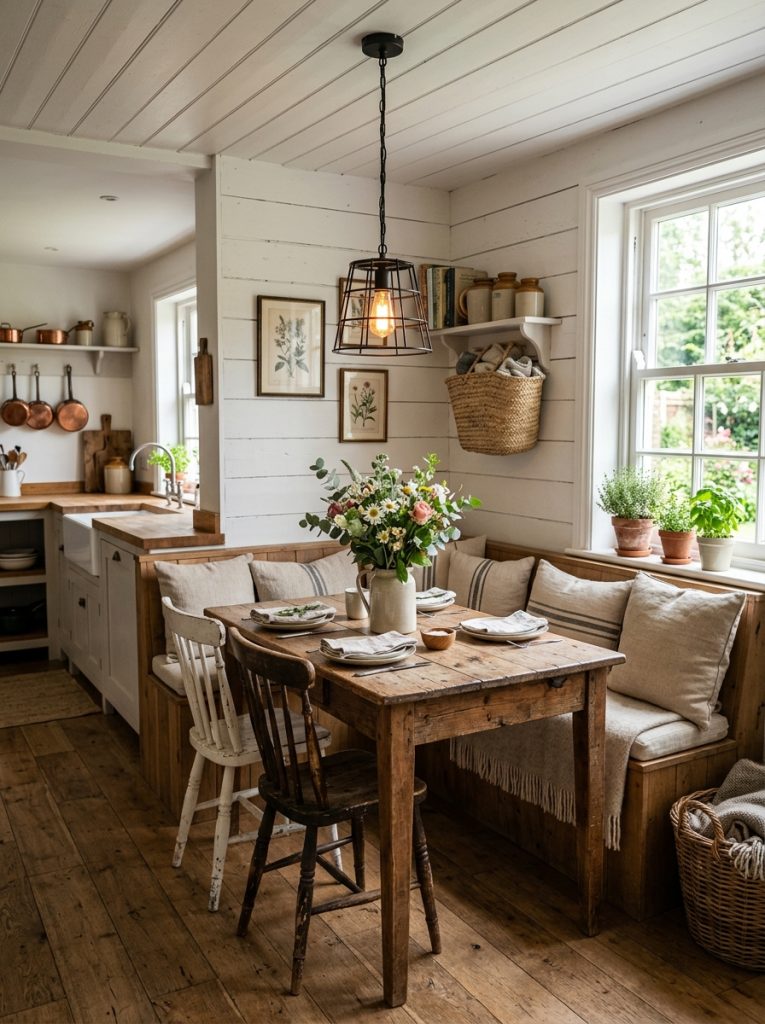
A farmhouse-inspired dining nook combines rustic materials with comfortable seating to create a welcoming family gathering space. Begin with a solid wood dining table paired with a built-in bench on one side and matching chairs opposite the seating. Add linen seat cushions and textured throw pillows that introduce comfort while complementing natural wood finishes. Install a black metal pendant light above the table to define the dining area and provide focused illumination. Decorative wall shelves displaying ceramic dishes, woven baskets, and small potted plants reinforce the farmhouse aesthetic without creating clutter. Neutral colors, exposed wood grain, and soft textiles establish a warm atmosphere suitable for everyday meals while maintaining practical organization.
Idea 4: Scandinavian Dining Nook
Setup Method
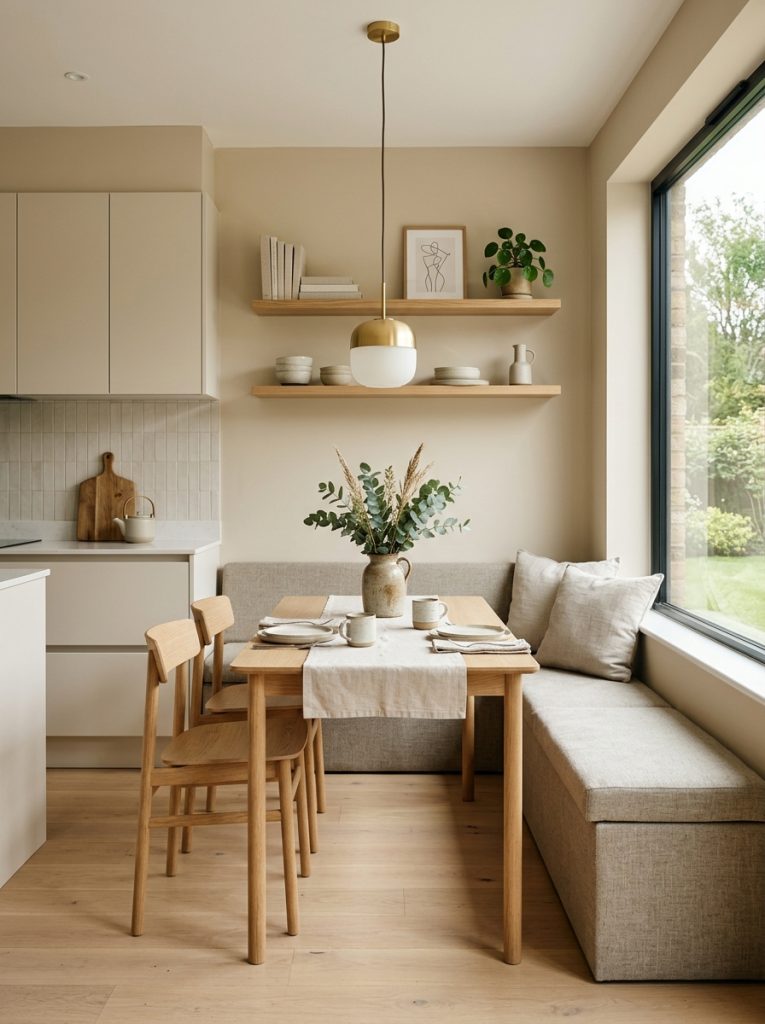
A Scandinavian dining nook emphasizes clean lines, natural materials, and efficient use of space. Choose a light oak dining table paired with a simple upholstered bench and minimalist dining chairs. Add soft neutral cushions that provide comfort while maintaining an uncluttered appearance. A woven rug beneath the table defines the seating area while introducing subtle texture. Install a simple pendant light with warm illumination that complements natural daylight during the evening. Floating shelves displaying a few carefully selected decorative objects help personalize the space without overwhelming the minimalist design. This beginner friendly project demonstrates how thoughtful planning and restrained decoration create a calm, functional dining environment.

Idea 5: Cozy Breakfast Nook with Storage
Execution Process
A breakfast nook with built-in storage combines practical organization with everyday comfort. Install a storage bench beneath one wall and pair it with a compact dining table and two comfortable chairs. Use the hidden storage compartments to organize kitchen linens, serving trays, or seasonal table decorations. Add upholstered cushions and a soft throw blanket to create a welcoming atmosphere while maintaining practicality. Decorative artwork and indoor plants personalize the area without reducing functionality. Position a warm pendant light above the table to establish the nook as a separate dining zone connected to the kitchen. This creative project maximizes limited space while keeping frequently used items organized and easily accessible.

Idea 6: Round Table Kitchen Nook
How to Create
A round dining table creates a practical solution for smaller kitchens because its curved edges improve movement around the seating area. Pair the table with a curved built-in bench or compact upholstered chairs that fit comfortably within the available space. Add seat cushions in coordinating neutral fabrics that soften the seating while reinforcing the overall design. Position the dining nook beneath a decorative pendant light that highlights the table without overpowering the room. A small centerpiece featuring fresh flowers or seasonal greenery introduces color while maintaining simplicity. This layout encourages conversation by allowing everyone to face one another comfortably during meals while preserving valuable floor space.

Idea 7: Minimalist Kitchen Dining Space
How to Make
A minimalist dining nook focuses on functionality through carefully selected furniture and restrained decorative styling. Choose a simple rectangular table with slim dining chairs or a narrow upholstered bench positioned against the wall. Keep decorative accessories limited to a ceramic vase, one framed artwork, and a compact indoor plant that introduces subtle texture without clutter. Floating shelves above the seating provide practical storage for everyday dishes or decorative objects while maintaining an open appearance. Neutral colors including white, beige, gray, and light wood establish a calm atmosphere suitable for modern kitchens. This project demonstrates how efficient planning and balanced design create an elegant dining area within a compact footprint.
Idea 8: Industrial Kitchen Nook
Step-by-Step Guide
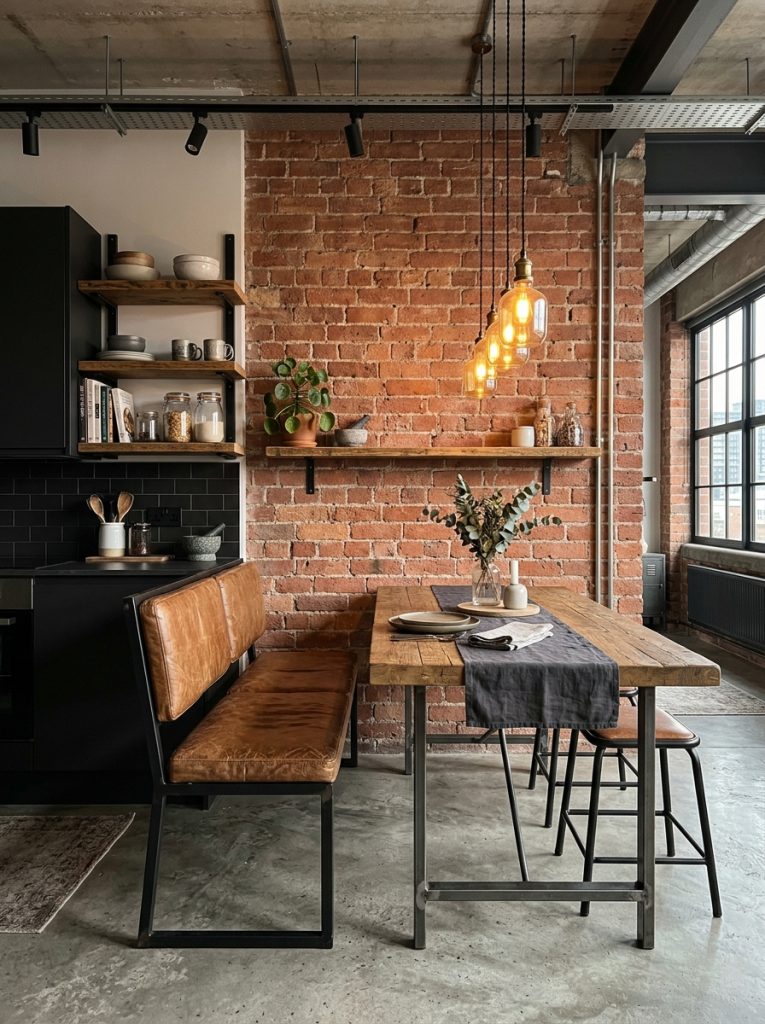
An industrial-inspired dining nook combines raw materials with practical furniture to create a stylish yet functional kitchen extension. Begin with a reclaimed wood dining table supported by black metal legs and pair it with a bench featuring matching industrial details. Exposed brick walls or textured wall finishes reinforce the design while metal pendant lighting provides focused illumination above the table. Leather cushions or upholstered seating improve comfort without reducing the industrial character. Floating shelves made from reclaimed wood and steel brackets display decorative accessories while preserving organization. This beginner friendly design balances rugged materials with comfortable seating to create an inviting everyday dining space.
Idea 9: Compact Apartment Dining Nook
Setup Method
Small apartments benefit from compact dining nooks designed to maximize every available square foot. Position a narrow wall-mounted bench beside a small round table while using lightweight chairs that can easily be moved when additional space is required. Install floating shelves above the seating to organize dishes, books, or decorative accessories without occupying floor space. Mirrors positioned nearby reflect natural light and help the dining area feel larger. Neutral fabrics combined with light wood finishes create a bright atmosphere while maintaining practical functionality. This efficient arrangement transforms a limited kitchen corner into a comfortable dining area suitable for everyday meals.

Idea 10: Open-Concept Family Dining Nook
Execution Process
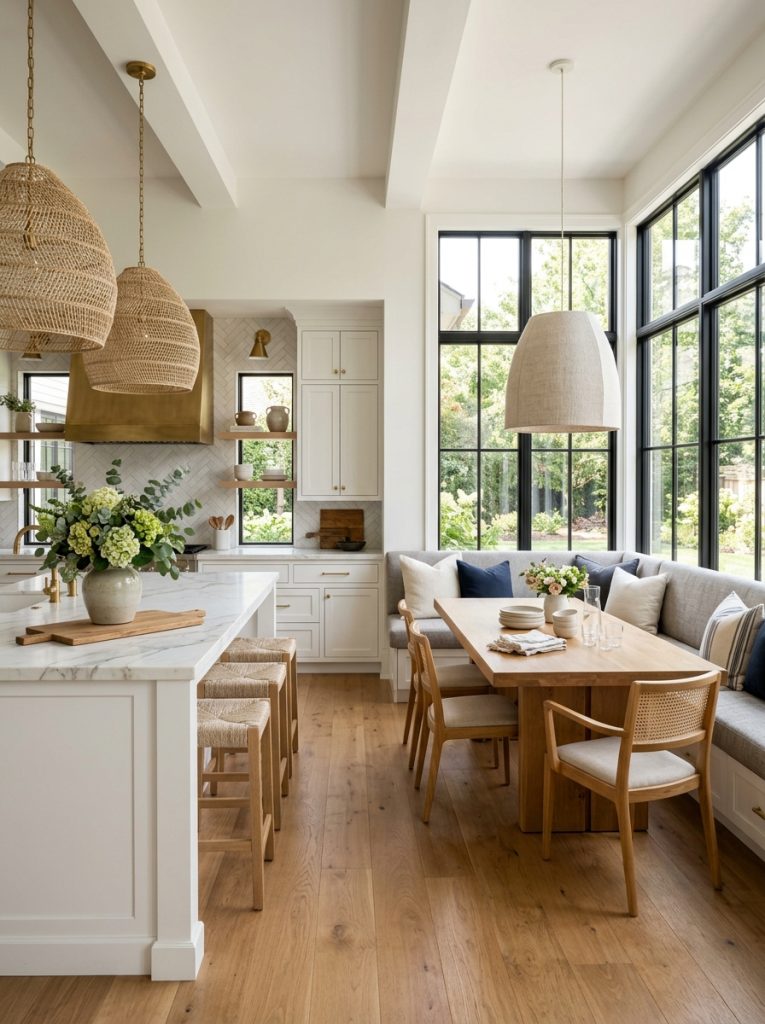
An open-concept dining nook connects naturally with the kitchen while maintaining a distinct gathering area for meals and conversation. Use a large built-in bench positioned against one wall together with comfortable dining chairs surrounding a spacious rectangular table. Layer seat cushions and decorative pillows that coordinate with the surrounding kitchen decor while adding warmth through textured fabrics. Install a statement pendant light above the table to visually separate the dining area from the kitchen workspace. Decorative artwork, indoor plants, and woven baskets enhance the overall aesthetic while preserving organization. This layout supports family meals, entertaining guests, and everyday activities while creating a comfortable transition between cooking and dining spaces.
Common Beginner Mistakes and How to Avoid Them
One of the most common mistakes is selecting oversized furniture that restricts movement around the kitchen. Measure every area carefully before purchasing seating or tables to maintain comfortable walkways. Another frequent issue is overlooking lighting, which can make the dining nook feel disconnected from the rest of the kitchen. Installing a dedicated pendant light helps define the space while improving functionality. Avoid excessive decorative accessories that reduce usable table space or create visual clutter. Storage should also be considered early in the planning process to prevent everyday items from accumulating around the dining area. Thoughtful planning ensures the finished nook remains practical, organized, and welcoming.
Practical Tips for Better Results
Choose durable, easy-to-clean materials that withstand daily use while maintaining their appearance over time. Upholstered seating should include removable cushion covers whenever possible for easier maintenance. Layer lighting by combining natural daylight with pendant fixtures and nearby kitchen lighting to create a comfortable atmosphere throughout the day. Use built-in benches or multifunctional furniture whenever available to maximize storage without increasing the room’s footprint. Keep decorative centerpieces simple so they do not interfere with everyday meals. Regular organization helps preserve a clean and inviting dining area while encouraging frequent use by family and guests alike.
Styling, Presentation, and Organization Ideas
Coordinate the dining nook with the surrounding kitchen using complementary colors, wood finishes, and decorative accessories that create visual continuity. Display a few carefully selected items such as ceramic bowls, framed artwork, woven baskets, or indoor plants to personalize the space while maintaining balance. Layer textiles through seat cushions, rugs, and curtains that introduce warmth without overwhelming the design. Floating shelves provide additional storage while displaying decorative objects in an organized manner. Fresh flowers or seasonal greenery placed at the center of the table create an inviting focal point that changes throughout the year. Thoughtful styling transforms a practical dining nook into an attractive extension of the kitchen.
Budget and Time Planning
Creating a kitchen dining nook does not require major renovations or expensive furniture. Many projects begin with an existing table and seating enhanced by affordable cushions, lighting, shelving, and decorative accessories. Repurposing furniture already available in the home reduces costs while supporting sustainable decorating practices. Planning measurements before purchasing furniture prevents unnecessary expenses and ensures every item fits comfortably. Most dining nook projects can be completed during a single weekend when materials and furniture placement are prepared in advance. Budget ideas centered on practical organization often deliver the most attractive and functional results without exceeding financial goals.
Creative Expansion and Advanced Inspiration
Once the dining nook is complete, enhance its functionality with custom built-in cabinetry, integrated storage drawers, decorative wall paneling, or upgraded lighting that complements the kitchen. Seasonal table runners, interchangeable cushions, and rotating centerpieces allow the space to evolve throughout the year while maintaining a consistent design style. Larger kitchens may incorporate open shelving, coffee stations, or breakfast bars that connect naturally with the dining area. Adding artwork, statement lighting, or textured wall finishes introduces additional character without compromising practicality. These creative ideas encourage continued personalization while ensuring the dining nook remains one of the most inviting and frequently used spaces in the home.





Post Comment