10 Firepits Backyard DIY Ideas

A backyard firepit creates a comfortable outdoor gathering space that can be enjoyed throughout much of the year. Whether the goal is to build a relaxing seating area, improve a garden layout, or add a practical feature for entertaining, a DIY firepit is an easy project that fits many outdoor spaces. Pinterest ideas often highlight simple materials, thoughtful planning, and creative layouts that homeowners can complete with basic tools and careful preparation. This guide explores ten original firepits backyard DIY ideas that combine attractive design with practical construction methods. You will also learn how to prepare your workspace, choose suitable materials, avoid common beginner mistakes, and organize the surrounding area for both comfort and function. Every project focuses on beginner friendly techniques while maintaining a clean, modern design that complements different backyard styles and budgets.
Why Backyard Firepit DIY Projects Are Trending
Firepit projects continue to appear among the most popular Pinterest ideas because they transform unused outdoor areas into inviting spaces for relaxing and entertaining. Many homeowners appreciate that these DIY projects require relatively simple materials while allowing complete freedom to customize size, shape, and appearance. A firepit can become the centerpiece of a backyard without requiring major landscaping changes or expensive renovations. Modern minimalist style, rustic decoration, and natural stone designs all remain popular because they suit different outdoor environments. Beginners also find these projects accessible since most designs rely on stacking blocks, gravel preparation, and basic measuring techniques rather than advanced construction skills. With careful planning, a firepit project delivers long-term value while encouraging more outdoor activities with family and friends.
Materials and Preparation
Before beginning any firepit project, choose a safe location that is away from buildings, fences, overhanging trees, and other combustible materials. Measure the available space carefully to determine the ideal firepit diameter and seating arrangement. Common materials include landscape blocks, natural stone, gravel, sand, paving stones, concrete pavers, and metal fire rings when desired. Useful tools include a shovel, measuring tape, string line, tamper, level, wheelbarrow, work gloves, and safety glasses. Remove grass and vegetation from the selected area before leveling the ground and creating a stable gravel base. Planning the surrounding decoration, seating, walking paths, and storage areas before construction helps create a balanced outdoor layout that feels organized and functional from every angle.
Idea 1: Circular Stone Gathering Firepit
How to Create
A circular stone firepit remains one of the most timeless backyard designs because its shape naturally encourages conversation while fitting into many landscape styles. Begin by marking a circle using a center stake and string before removing the grass inside the outline. Dig several inches deep, compact the soil, and add a layer of gravel followed by leveling sand. Stack landscaping stones in even rows while checking each layer with a level to maintain stability. Position comfortable seating evenly around the circle to create a balanced layout that improves accessibility for everyone. Decorative gravel surrounding the firepit reduces mud while providing a neat finish that complements natural stone. Add simple stepping stones leading toward the firepit to improve organization and create a welcoming path. This easy project blends traditional appearance with practical construction while remaining suitable for beginners following a step by step tutorial.

Idea 2: Square Paver Firepit Design
Step-by-Step Guide
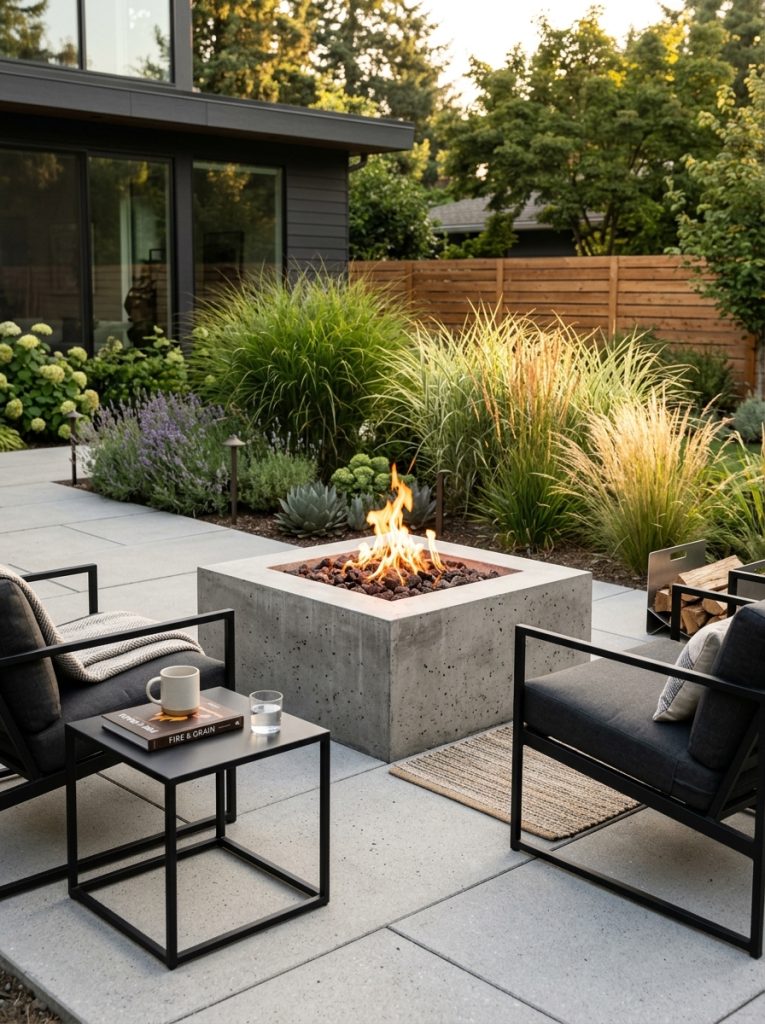
A square firepit offers clean geometry that pairs well with modern design and structured landscaping. Start by marking a square footprint and excavating the ground evenly before filling the area with compacted gravel. Install a level foundation using paving sand before arranging concrete blocks into a square configuration. Alternate the joints between each layer to strengthen the finished structure and improve stability. Leave enough open space around the firepit for outdoor seating and safe movement. Large square patio pavers surrounding the firepit define the gathering area while creating a durable walking surface that stays clean throughout different seasons. Incorporate matching planters or low garden beds nearby to soften the structured appearance without overwhelming the space. This handmade project combines simple materials with organized planning to create an attractive outdoor centerpiece that suits both contemporary and traditional backyards.
Idea 3: Rustic Natural Rock Firepit
Setup Method
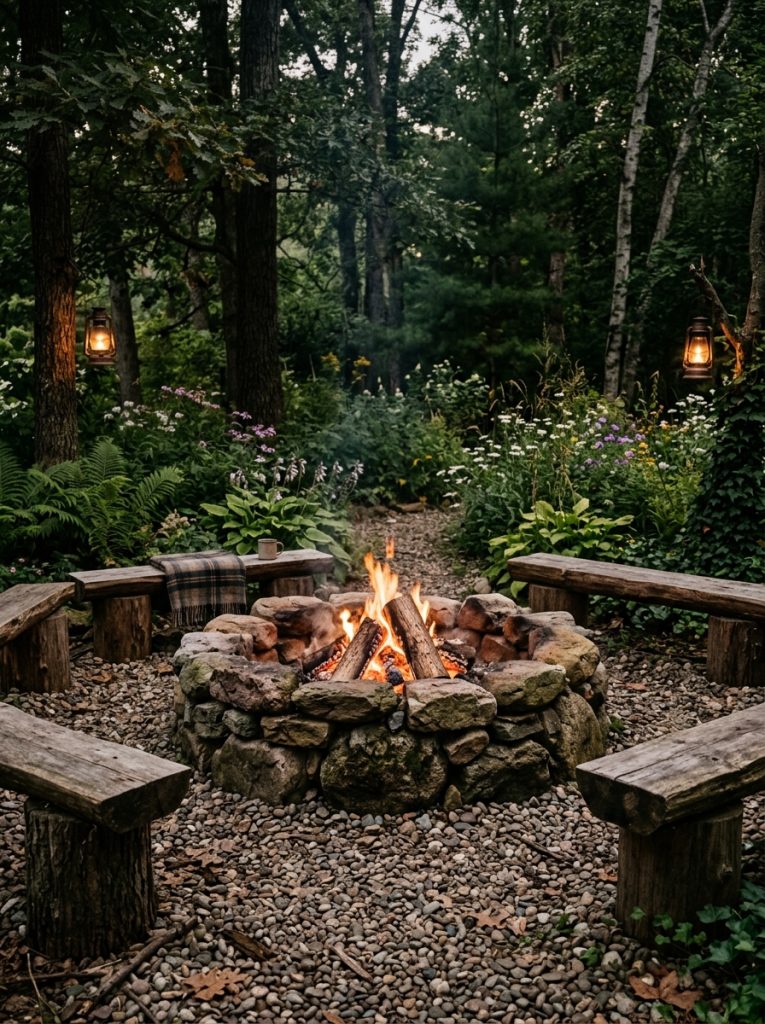
Natural rocks create an organic firepit that blends beautifully into gardens and wooded landscapes. Select stones with relatively flat surfaces so they stack securely while maintaining a natural appearance. Prepare the site with compacted gravel before arranging the largest rocks along the base. Gradually build upward while adjusting each stone to reduce gaps and improve stability. The irregular shapes produce an authentic rustic aesthetic that works well alongside native plants, wooden benches, and gravel pathways. Mulch and low-growing greenery surrounding the firepit help integrate the structure into the existing landscape while reducing maintenance. Because every stone is different, take time to evaluate the balance of each layer before continuing construction. This DIY project demonstrates how simple materials collected or sourced locally can produce an attractive backyard feature filled with character and lasting visual appeal.
Idea 4: Minimalist Gravel Firepit Area
How to Make
A minimalist firepit emphasizes clean lines, uncluttered decoration, and efficient organization. Start by outlining a generous rectangular area larger than the firepit itself. Remove vegetation before installing landscape fabric to reduce weed growth. Cover the fabric with decorative gravel and place a circular or square firepit at the center. Arrange matching outdoor chairs symmetrically around the feature to reinforce the balanced layout. Large stepping stones provide organized access without disturbing the gravel surface. Restrict decorative elements to a few simple planters and subtle lighting so the firepit remains the primary focal point. Neutral colors and consistent materials strengthen the modern aesthetic while making the entire backyard feel larger. This creative project is ideal for homeowners seeking an easy project with low maintenance requirements and a polished appearance inspired by trending Pinterest ideas.
Idea 5: Brick Firepit with Built-In Seating
Execution Process
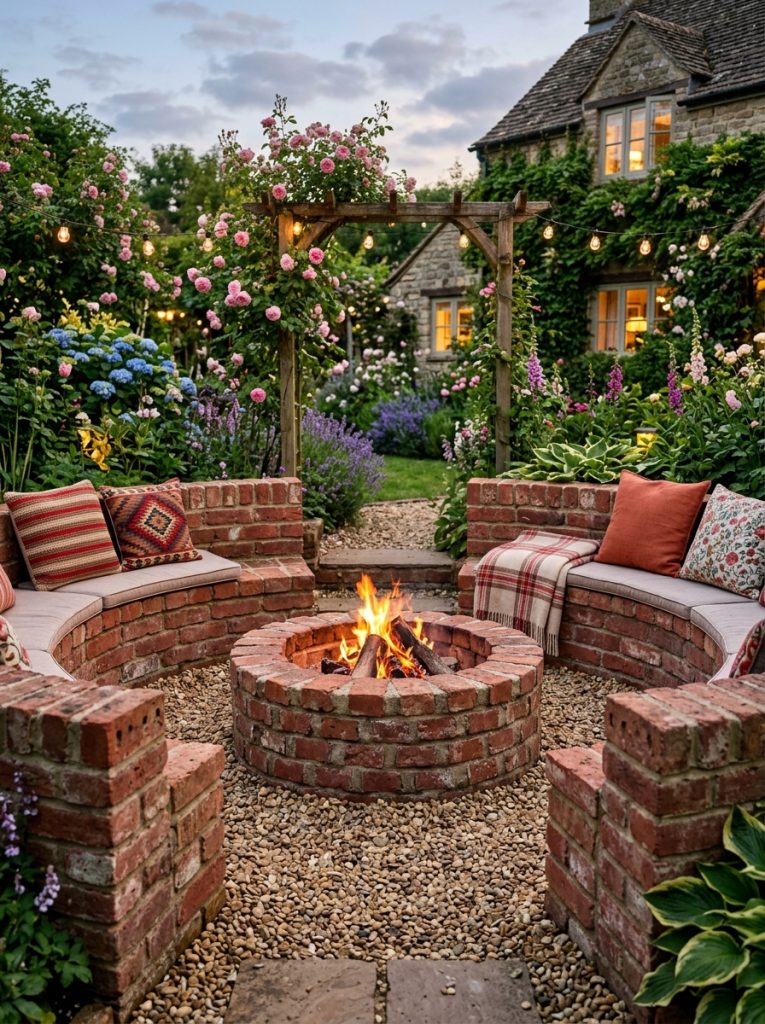
Combining a brick firepit with permanent seating creates a functional gathering area that encourages longer outdoor conversations. Begin by constructing the circular or square firepit on a compacted gravel foundation. Once the firepit is complete, extend the design by building low brick seating walls positioned at a comfortable distance from the flames. Cap the seating with smooth stone or concrete slabs for improved comfort and durability. Leave small openings between seating sections to allow convenient movement throughout the area. Decorative cushions can be added temporarily during gatherings while being stored afterward to protect them from weather. Surround the seating with gravel or pavers to simplify maintenance and improve drainage. This beginner friendly DIY tutorial uses consistent materials throughout the project, producing a coordinated outdoor space that feels thoughtfully planned and visually cohesive.
Idea 6: Sunken Backyard Firepit
How to Create
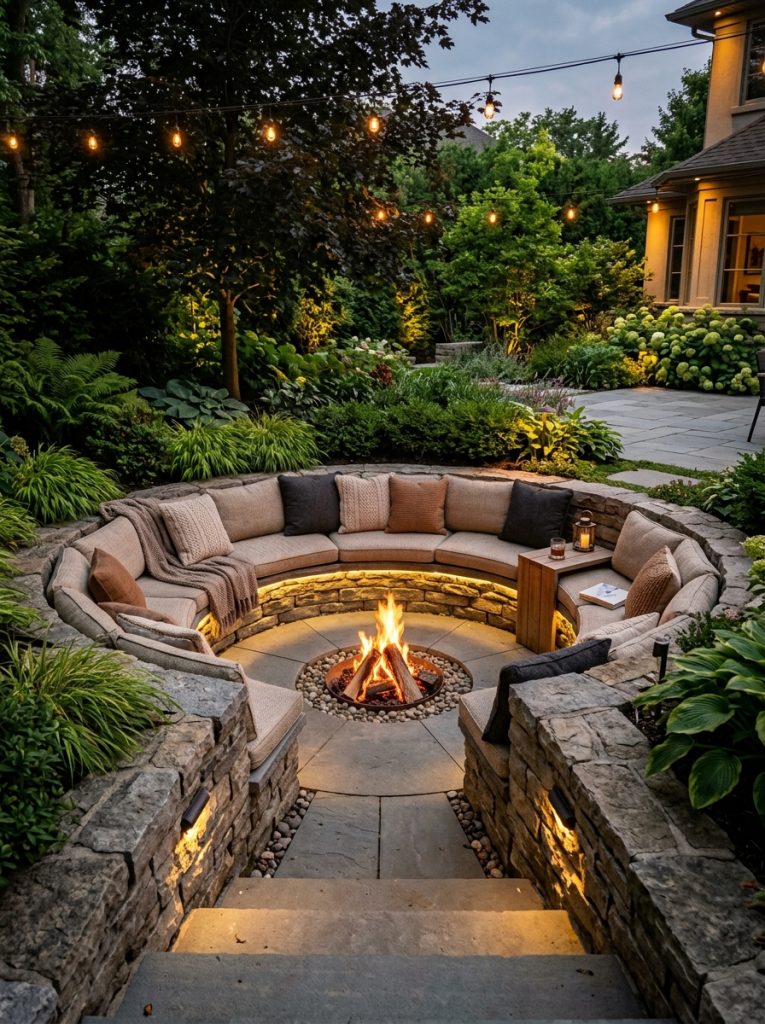
A sunken firepit creates a cozy atmosphere by lowering both the firepit and surrounding seating below ground level. Carefully measure the area before excavating a shallow circular or square section that provides enough room for comfortable movement. Install compacted gravel and retaining blocks around the perimeter to stabilize the excavated space. Position the firepit at the center while arranging built-in benches or weather-resistant seating along the edges. Steps leading into the area improve accessibility while adding architectural interest. Incorporating drainage beneath the gravel foundation helps manage rainwater effectively. Soft landscape lighting installed around the upper edge highlights the design without overwhelming the peaceful atmosphere. This project requires additional planning but rewards homeowners with a distinctive outdoor feature that feels private, inviting, and ideal for evening gatherings.

Idea 7: Patio Firepit Corner Retreat
Setup Method
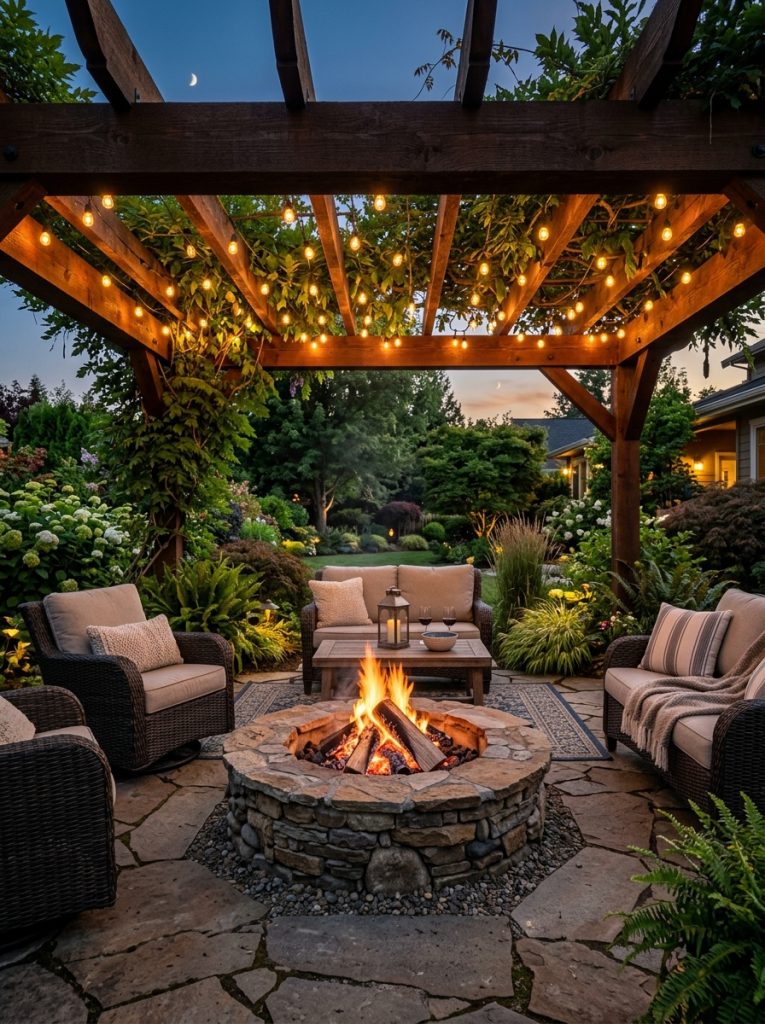
Unused patio corners can become attractive destinations by incorporating a compact DIY firepit. Choose a corner with adequate clearance from structures and prepare the foundation using gravel and paving stones. Build a modest firepit that fits the available space while preserving comfortable walking paths. Position two or four outdoor chairs with a small side table to create a practical relaxation area. Decorative containers filled with ornamental grasses or seasonal flowers soften the surrounding hardscape without requiring extensive landscaping. String lighting mounted nearby adds gentle illumination that complements evening use while maintaining a welcoming atmosphere. Matching pavers unify the firepit with the existing patio, allowing the entire outdoor area to feel intentionally designed. This creative idea demonstrates how thoughtful planning can transform even small backyard spaces into comfortable gathering areas.
Idea 8: Firepit with Gravel Walkway
Step-by-Step Guide
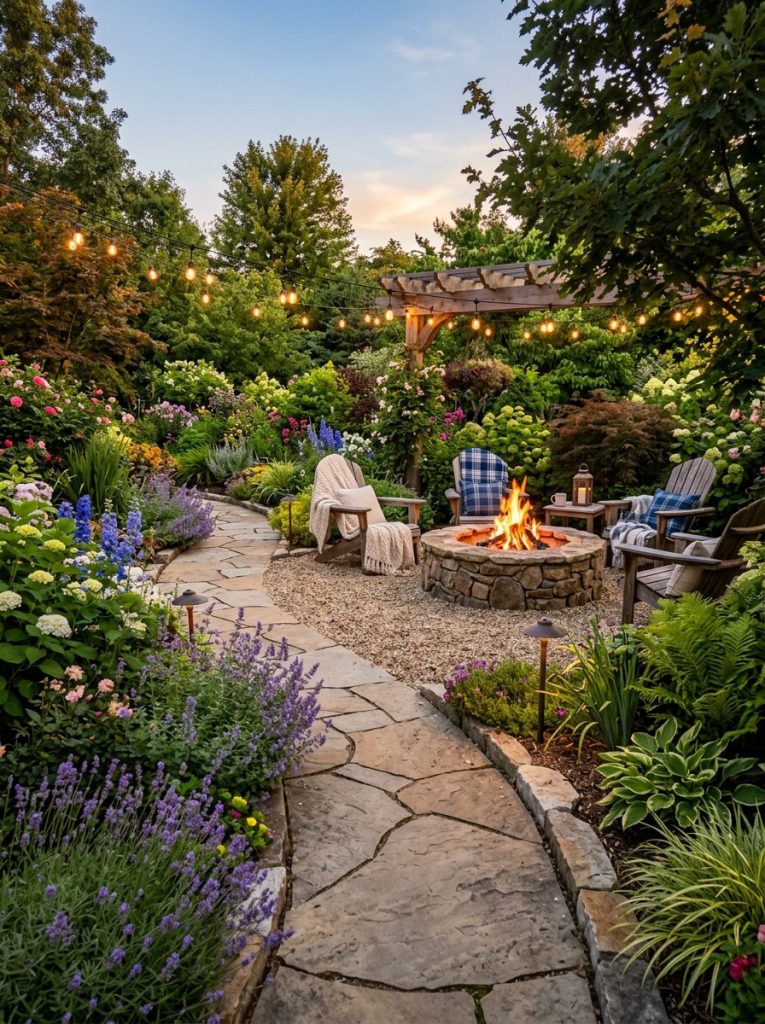
Connecting a firepit to the rest of the backyard using a defined gravel walkway improves organization while enhancing visual flow. Begin by constructing the firepit on a stable foundation before planning a gently curved or straight path leading toward it. Install edging along both sides of the walkway to keep gravel contained and maintain clean lines. Add stepping stones within the gravel for improved comfort and accessibility during wet weather. Low landscape lighting positioned beside the path increases visibility without dominating the design. Plant shrubs or ornamental grasses along the walkway to frame the approach naturally. Matching gravel between the path and firepit creates continuity that strengthens the overall layout. This easy project combines decoration, functionality, and accessibility while encouraging regular use of the backyard throughout different seasons.

Idea 9: Multi-Level Firepit Landscape
How to Make
Backyards with natural slopes can benefit from a multi-level firepit layout that introduces structure while making better use of uneven terrain. Build a level lower terrace using retaining blocks before installing a compacted gravel foundation for the firepit. Additional terraces can accommodate seating, planting beds, or decorative features without overcrowding the space. Stone steps connecting each level improve movement while adding visual interest. Incorporate retaining walls that match the firepit materials to establish a consistent aesthetic throughout the landscape. Native plants placed around each terrace reduce erosion while softening the appearance of the stonework. Careful planning ensures each level serves a practical purpose without compromising safety. This handmade design transforms challenging landscapes into organized outdoor living spaces that feel balanced and professionally arranged.
Idea 10: Firepit with Decorative Garden Border
Execution Process
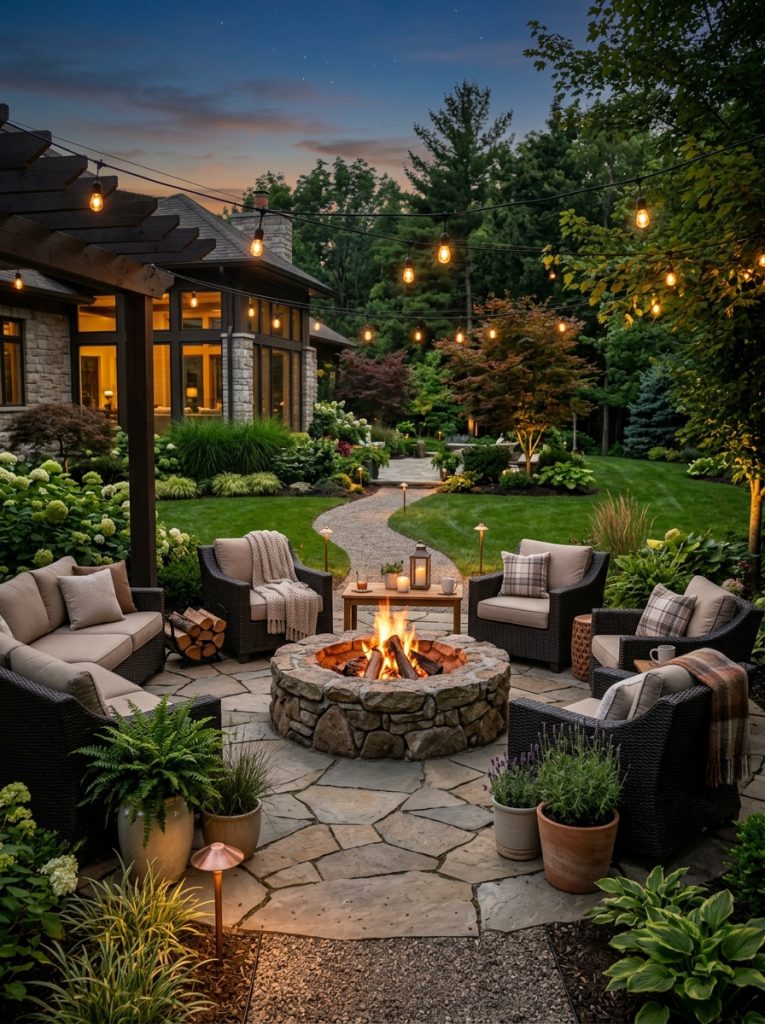
Framing a firepit with thoughtfully planned planting beds enhances its appearance while creating a smooth transition into the surrounding landscape. Construct the firepit first using your preferred materials before outlining generous planting borders around the gathering space. Fill the beds with low-maintenance ornamental grasses, flowering perennials, and evergreen shrubs that provide seasonal interest without obstructing visibility. Install mulch to reduce weeds and maintain soil moisture while defining the planting areas with stone edging. Position comfortable seating outside the planted border to preserve open circulation around the firepit. Decorative boulders or simple garden sculptures can serve as subtle accents without distracting from the main feature. This project combines practical organization with natural decoration, resulting in an attractive backyard destination that remains visually appealing throughout the year.
Common Beginner Mistakes and How to Avoid Them
Many first-time builders focus on appearance before preparing a stable foundation, which often leads to uneven firepit walls and long-term maintenance problems. Skipping ground leveling or compacting the gravel insufficiently can reduce stability over time. Another common mistake involves placing the firepit too close to fences, trees, or buildings, creating unnecessary safety concerns. Using inconsistent block sizes without checking alignment frequently may produce noticeable gaps that weaken the finished structure. Careful measuring before construction and regularly using a level throughout the project significantly improve final results. Planning seating, walkways, and surrounding decoration before construction also prevents overcrowded layouts and improves the overall organization of the backyard.
Practical Tips for Better Results
Measure every section twice before placing permanent materials to reduce errors during construction. Maintain consistent spacing around the firepit to create comfortable seating areas and improve accessibility. Compact each gravel layer thoroughly before continuing to the next stage for a stronger foundation. Keep pathways wide enough for safe movement while selecting materials that complement the overall backyard style. Blend decorative gravel, pavers, and planting beds using similar colors to achieve a cohesive aesthetic. Working methodically through each step by step stage allows beginners to produce cleaner, more professional-looking results while minimizing unnecessary adjustments later in the project.
Styling, Presentation, and Organization Ideas
A thoughtfully organized firepit area feels more inviting while remaining practical for regular use. Arrange seating in balanced groups that encourage conversation without restricting movement around the firepit. Define the gathering space using gravel, pavers, or outdoor rugs designed for exterior conditions. Decorative planters, simple lanterns, and subtle lighting contribute visual interest while maintaining a clean minimalist style. Organize firewood storage nearby using a dedicated rack positioned safely away from the flames. Coordinating colors between seating, pathways, and planting areas creates a unified outdoor design that reflects current Pinterest inspiration while remaining timeless and functional.
Budget and Time Planning
Careful planning allows homeowners to complete a firepit project without unnecessary expenses or delays. Begin by measuring the site accurately and estimating required materials before purchasing supplies. Reusing existing stone, gravel, or pavers where appropriate can reduce overall costs while maintaining quality. Divide larger projects into manageable stages such as site preparation, foundation construction, firepit assembly, and landscape finishing. Weekend scheduling often provides enough time for smaller DIY tutorials, while more advanced projects may require several sessions. Tracking material quantities carefully prevents waste and helps maintain the project within its intended budget.
Creative Expansion and Advanced Inspiration
Once the firepit is complete, additional landscape features can enhance the overall outdoor experience without changing the original design. Consider extending gravel walkways to nearby gardens, creating dedicated seating zones, or adding pergolas that provide shade during daytime use. Raised planting beds introduce seasonal color while helping define outdoor living spaces. Decorative stone borders and simple water features can complement the firepit without competing for attention. As confidence grows, homeowners may explore larger creative projects that connect patios, gardens, and entertainment areas into one cohesive backyard design. These advanced ideas build naturally upon the original DIY project while maintaining practical organization, aesthetic balance, and lasting outdoor enjoyment.





Post Comment